
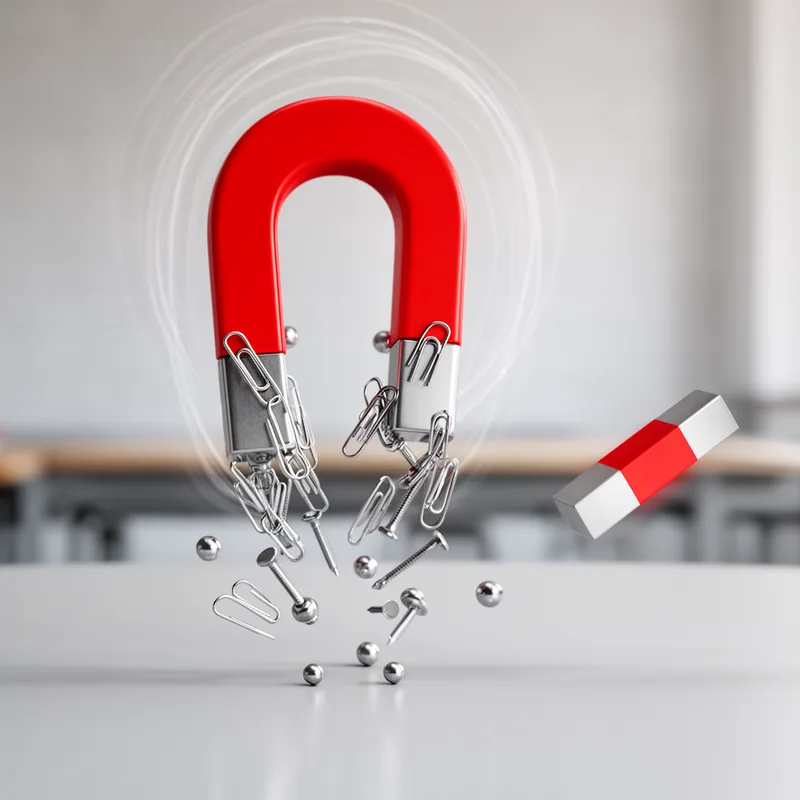
magnetic force
 2
4.1
2
4.1

- noun
- /mæɡˈnɛtɪk fɔrs/
- Specialized
- The magnetic force from the large magnet pulled the metal objects towards it.
Loading YouTube…
Watch on YouTubeAnd Maxwell, between these two other giants, taught us about electric and magnetic forces.
- And Maxwell, between these two other giants, taught us about electric and magnetic forces.
Examples
-
The portrait was, for him, a lodestone imbued with some irresistible magnetic force.
Fiction book (1992) -
In a generator, an engine or turbine drives the rotor against the direction of magnetic force, converting mechanical power to electricity.
Academic text (2000) -
It's producing a magnetic force.
-
She starts toward him, as if pulled by a magnetic force.
Fiction book (2001) -
One force, the electric force, is not dependent on motion; the other force, the magnetic force, is dependent on motion.
Blog text (14) -
In a motor, the rotor is allowed to turn in the direction of magnetic force, and electric power is converted into mechanical power.
Academic text (2000) -
They are exploring probe tips for two modes of reading: one based on magnetic force and the other on magnetoresistance.
Academic text (2002) -
To make a real medical microbot, we started with iron cobalt nanoparticles, which are more sensitive to magnetic forces than other nontoxic metal alloys.
Blog text (12) -
Similar to how a magnetic force can attract certain metals, the Earth’s magnetic field guides compasses.
-
Engineers use magnetic force to create levitating trains that glide above their tracks.
Synonyms
 1
3.7
1
3.7
A force that pulls iron or nails toward a magnet
Surface Forms
Morphology
The meaning is directly and compositionally built from 'magnetic' (having magnetism) + 'force' (a power that moves or affects objects); a B1 learner who knows both words can readily infer this refers to the force produced by magnetism. This is a regular noun–noun technical compound following predictable semantic combination patterns found across languages, so it is transparent to learners.
Etymology
The term magnetic force may come from old stories about lodestones found near a place called Magnesia that seemed to 'pull' small pieces of iron. So magnetic (the pulling stone) and force together make a clear picture: the power that 'attracts' or moves metal and other magnets.