
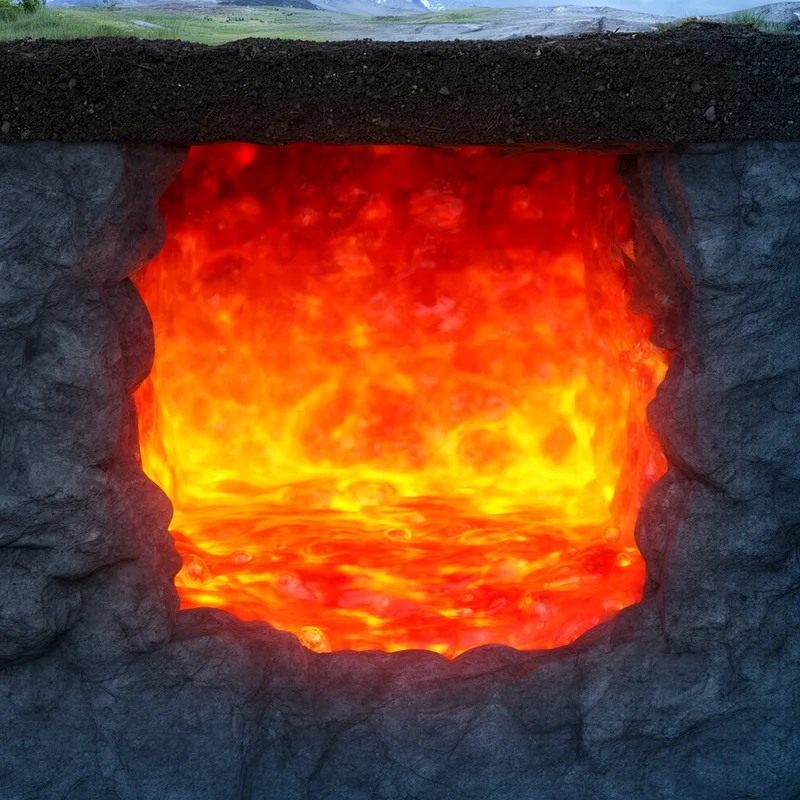
magma
 26
5.0
26
5.0

- noun
- /ˈmæɡmə/
- Specialized
- Beneath the volcano, scientists monitored the movement of molten magma through the rock layers.
- magma chamber
- basaltic magma
- molten magma
Loading YouTube…
Watch on YouTubeI guess like think of the type of magma that you see in Hawaii.
- I guess like think of the type of magma that you see in Hawaii.
- And what we can do now is imagine in the subsurface, we've got these areas where magma might come through.
- And as they drifted apart, magma rose up and fed thousands and thousands of submarine volcanoes.
- Yeah mate, he was also like big statues came out of magma all right.
- And no, we don't think these dinosaurs were spelunking in magma flows.
Examples
-
Sometimes new magma from deeper underground brings additional gassy compounds into the mix.
-
Far, far below gleamed the magma sea, flowing to a horizon that was red on black.
Fiction book (1991) -
Several miles below, it comes in contact with hot magma.
-
It's magma, and it's rising.
-
That inselberg was formed from cooling magma over a hundred million years ago.
-
There is already over a billion tons of magma ejected.
-
There's magma welling up in those every few years.
-
We're talking about magma being pressurized by tectonic activity.
-
When the pressure approaches a critical value, magma may break through to the surface and a volcanic eruption will begin.
Academic text (2002) -
And as they drifted apart, magma rose up and fed thousands and thousands of submarine volcanoes.
Surface Forms
Etymology
Magma comes from an old Greek word magma meaning 'a kneaded mass' or 'dough'. Think of hot, soft rock like bread dough that can flow under the ground, so magma means melted rock beneath the Earth's surface.