
macaroni
 1
9.9
1
9.9

- noun
- /ˌmækəˈroʊni/
- Archaic
- Orange-water macaroni?
Examples
-
Macaroni.
-
♪ Stuck a feather in his hat and called it macaroni ♪
-
Macaroni.
-
Why exactly did Yankee Doodle stick a feather in his hat and call it macaroni?
Academic text (1997) -
Yankee Doodle went to town riding on a pony Stuck a feather in his hat and called it macaroni
-
I'm a Yankee Doodle Dandy, stuck a feather in my cap and called it macaroni.
Fiction book (1991) -
It is the product of the coxcomb, a new category of narcissistic, effeminized masculinity, which included the "macaroni," fop, or dandy and men of the third sex.
Academic text (2013) -
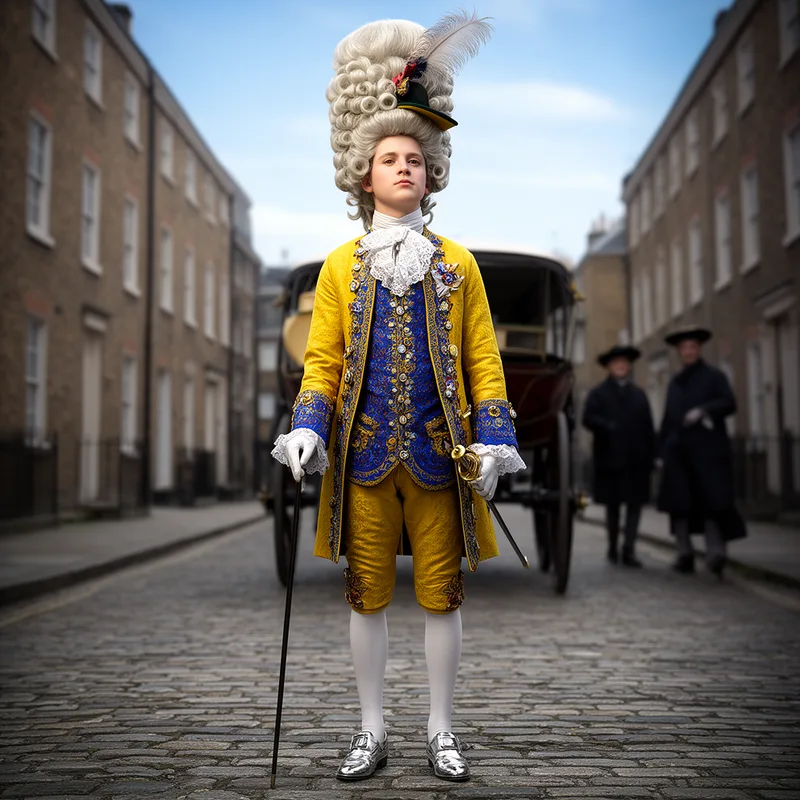
In 18th-century Britain, the macaroni was known for his flamboyant style and extravagant manners.
-
Social gatherings often featured a macaroni, dressed in the latest European fashions and known for his witty conversation.
-
The term 'macaroni' referred to fashionable young men who adopted Continental styles in Britain during the 1700s.
Idioms

Compounds



Surface Forms
Etymology
The word macaroni was also used in 18th-century Britain for a showy young man who loved very fancy European clothes and hair. This sense came from a joke: young men who had traveled used the foreign word maccheroni for the fancy pasta as a sign of being stylish, so calling someone a macaroni meant they were too fashionable.