
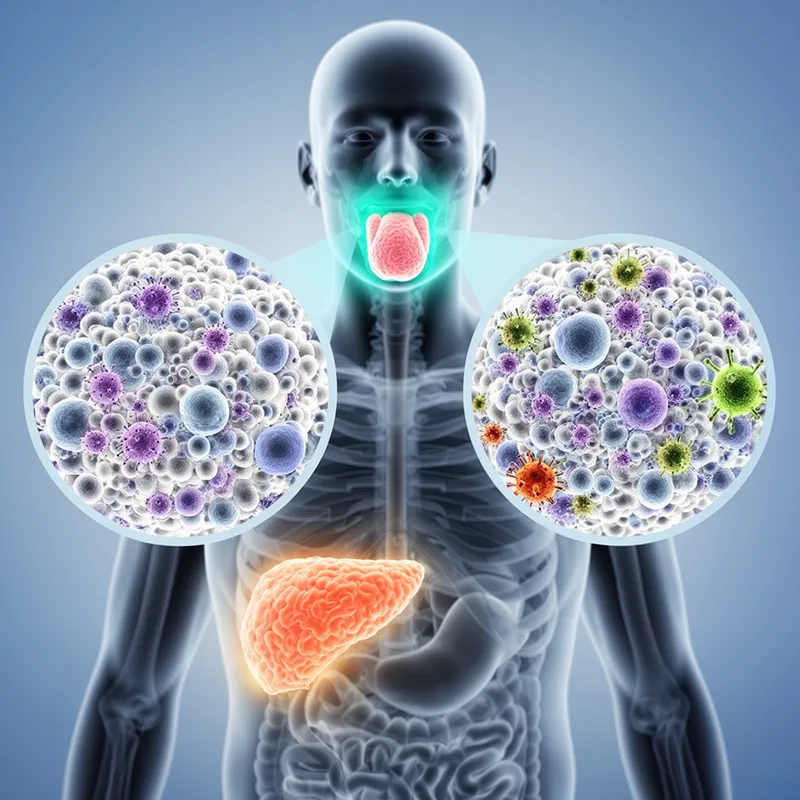
lymphoid tissue


 1
5.8
1
5.8
- noun
- /ˈlɪm.fɔɪd ˈtɪʃ.u/
- Specialized
- Doctors often examine the lymphoid tissue to determine the status of a patient's immune system.
- associated lymphoid tissue
Examples
-
Next, we look at bone marrow smears from a seventeen-year-old boy with Hodgkin's disease, a cancer of lymphoid tissue.
Fiction book (1996) -
The development of intestinal lymphoid tissues and innate and adaptive immunity early in life defines this neonatal window.
Academic text (2016) -
Clinically, it suggests that hyperplasia of the remaining lymphoid tissue might be a concern later on, especially in adults.
Academic text (2004) -
Well-developed lymphoid tissue with reactive follicles is seen.
Academic text (2007) -
Pathology of the FNA demonstrated benign lymphoid tissue.
Academic text (2004) -
Resting lymphocytes circulate in the blood, and cells in lymphoid tissues carry out surveillance for foreign antigens.
Academic text (2016) -
There was markedly enlarged palatal and nasopharyngeal lymphoid tissue and diffuse cervical lymphadenopathy.
Academic text (1995) -
Eighty percent of extramedullary plasmacytomas occur in the head and neck—within mucosal and submucosal lymphoid tissue.
Academic text (2010) -
The body's lymphoid tissue plays a crucial role in fighting infections and diseases.
-
The lymphoid tissue, including the spleen and lymph nodes, are vital components of the lymphatic system.
Synonyms
 1
4.2
1
4.2
Group of cells that help the body fight infection, often in the tonsils and small glands
Surface Forms
Morphology
This is a straightforward adjective + noun combination: 'lymphoid' (relating to lymphatic/immune functions) modifies 'tissue' (a group of cells), so the meaning 'tissue belonging to or composed of lymphatic/immune cells' is directly derivable from the parts. Although somewhat technical, the compositional pattern is regular and would be understandable to a B1 learner who knows both constituents.
Etymology
Lymphoid tissue comes from lymph, the clear fluid that carries 'white blood cells', and the small ending -oid that means 'like'. So lymphoid tissue is literally tissue that is full of lymph cells and helps the body fight infection.