
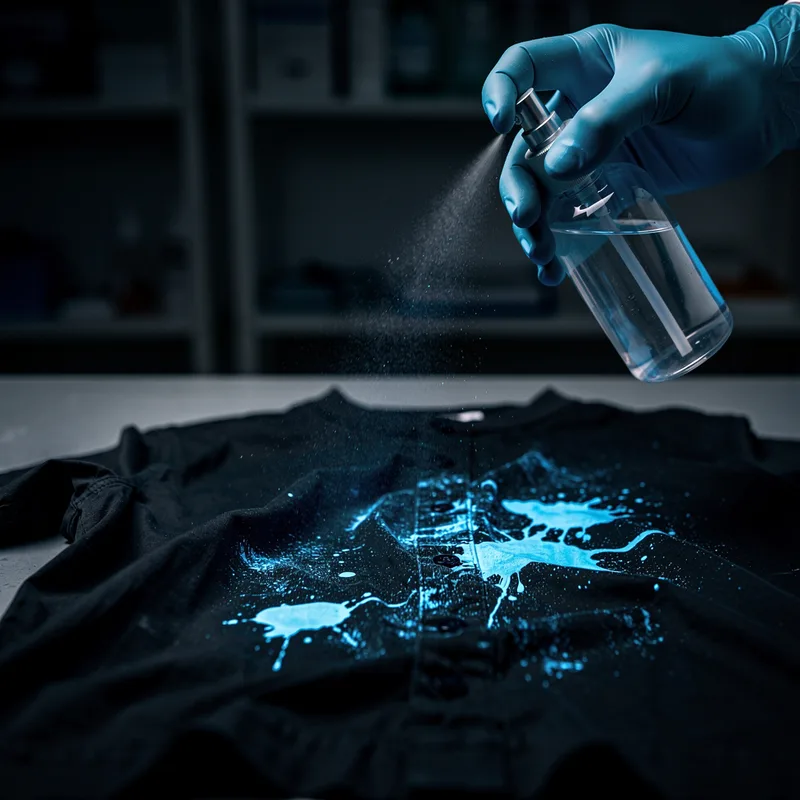
luminol
 8
9.9

- noun
- /ˈluːmɪnɒl/
- Specialized
- So, I'm gonna order a luminol sweep.
- luminol test
- luminol test for blood
- chemical luminol
Loading YouTube…
Watch on YouTubeYou can also take pictures of particularly if you use the fluorescence techniques, you will use lighting luminol.
- You can also take pictures of particularly if you use the fluorescence techniques, you will use lighting luminol.
Examples
-
Add just a little bit of luminol.
-
I wish I could see past the luminol-enhanced photos and be as firm in my beliefs as the two of you.
Blog text (12) -
Because our guys did a luminol test.
-
Add just a little bit of luminol.
-
So, luminol lit up the kitchen like the 4th of July.
-
Nurse, Sodium Luminol, two and a half grains.
-
And my understanding is they used luminol on the carpet and it lit up like a Christmas tree, which detects the presence of blood, right?
-
Frank suggested getting a crime scene unit to check the hangar with luminol, a chemical capable of detecting minute traces of blood, but the skeptics in the group were starting to grumble, especially Reed Collins and Vince Adams, the detectives in charge of the Lane case.
Fiction book (2001) -
Spraying suspected or faint blood stains with a mist of Luminol solution produces a short-lived luminescence, which tentatively identifies it as blood that can be filmed in the dark.
Academic text (2000) -
The luminol test confirmed the presence of blood at the crime scene, glowing brightly under UV light.
Synonyms

 1
9.9
A reddish-brown chemical used in lab tests to find blood
Surface Forms
Morphology
luminol = lumin + ol
Although formed from the combining form 'lumin-' (light) + the chemical suffix '-ol', 'lumin' is not a standalone English word and the term is a specialized chemical name, so its meaning is not transparently derived for an average B1 learner.
Etymology
The word luminol comes from the Latin root lumin- meaning 'light' and the chemical ending -ol, and it shares the same root as luminous. Because the chemical makes a blue light when it finds blood, its name is a simple way to remember its glowing effect.