
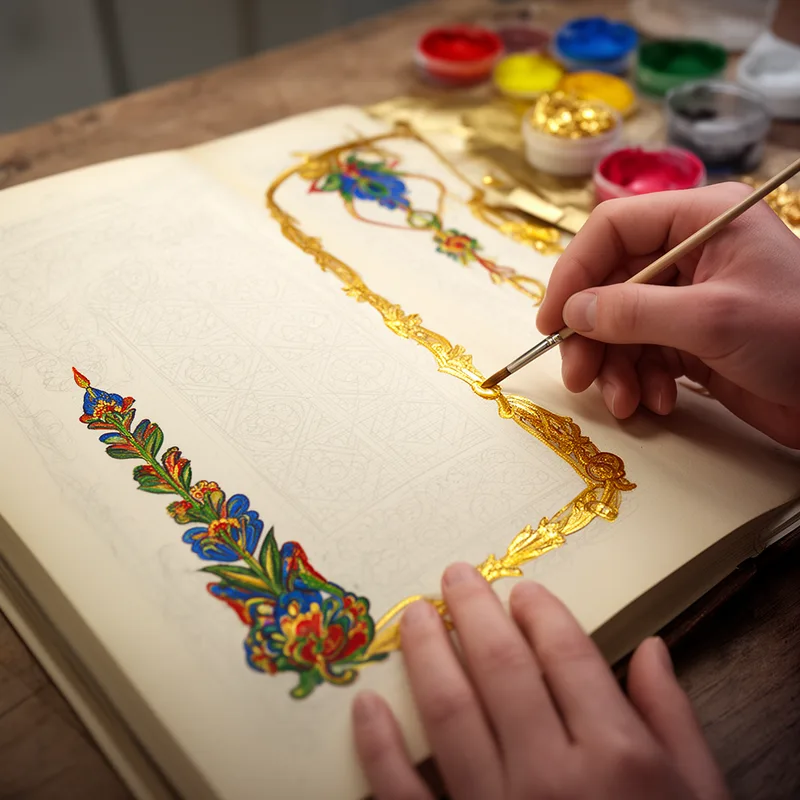
to lumine
- verb
- /ˈluːmɪn/
- Archaic
- In medieval times, monks often lumined religious texts to make them more beautiful and valuable.
Examples
-
The artist lumined the ancient manuscript with intricate gold patterns and vivid blue ink.
-
During the workshop, children lumined their own pages using bright paints and metallic foil.
-
The artist decided to lumine the pages of the ancient book.
-
She lumined the manuscript beautifully.
-
The monk carefully lumined the religious text with gold leaf and vibrant colors to enhance its beauty.
-
In the art class, students lumined their journals with colorful markers and shimmering ink to create unique designs.
-
Artists in the Middle Ages often lumined manuscripts to attract attention and display their skill.
Synonyms

 5
8.3
5
8.3

To decorate old hand-written books with gold and bright pictures
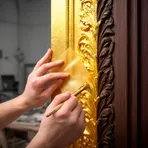
To put thin gold or gold leaf on something

To cover something with gold or thin gold leaf
How Ornate

Surface Forms
Etymology
Lumine comes from the Latin root lumen, meaning 'light', and shares the same root as luminous and illuminate; in medieval times scribes used gold and bright paint to make pages shine, so to lumine a manuscript is to decorate it so it 'glows' with light.