
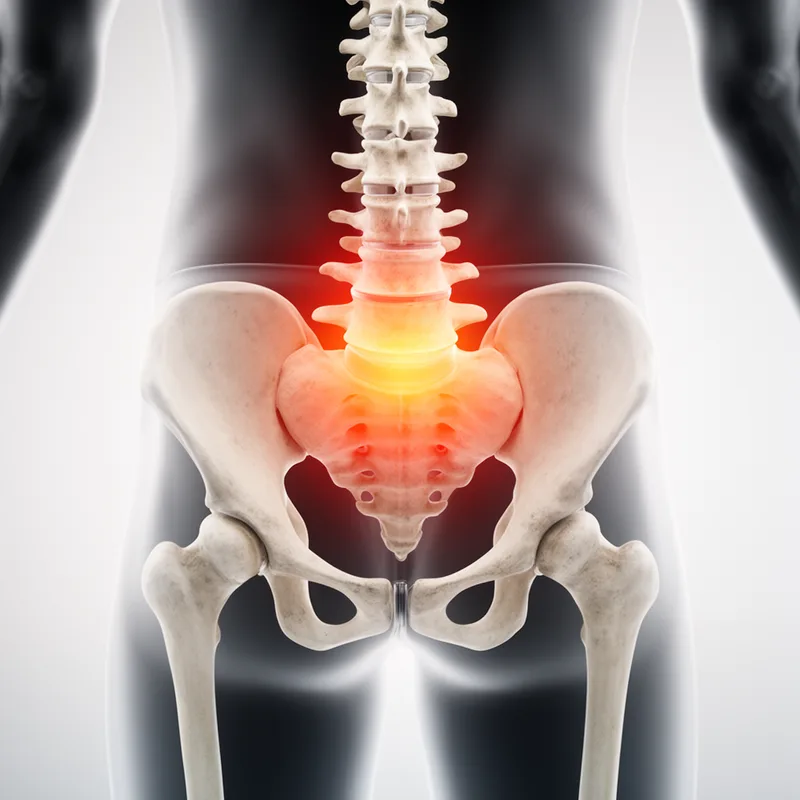
lumbosacral


 1
8.2
1
8.2
- adjective
- /ˌlʌmboʊˈseɪkrəl/
- Specialized
- EK testing in the present context uses trunk motion as a proxy measure for low back mobility, which, presumably, is restricted to lumbar vertebral joint segments and the lumbosacral region.
- lumbosacral plexus
- lumbosacral spine
Examples
-
Suggested normal range of motion values for lumbosacral mobility are a minimum of 100 degrees of flexion and 25 degrees of extension, and for straight leg raising a minimum of 75 degrees.
Academic text (1997) -
X-ray lumbosacral spine: degenerative changes with osteophytes.
Academic text (2007) -
Lumbosacral plexus injuries also usually occur.
Academic text (2006) -
There is a dip in his butt from his high-set tail to his lumbosacral joint!
Blog text (31) -
The CT scan also helps prepare the surgeon by providing clear visibility of the upper sacral vertebral bodies and lumbosacral junction in assessing the anatomic abnormalities of the area.
Academic text (2006) -
The components of motion that can be assessed on clinical evaluation include total lumbosacral flexion, extension, and side flexion, their true lumbar and pelvic (hip) components, and straight leg raising.
Academic text (1997) -
After a long day, she felt discomfort in her lumbosacral region, where her lower back meets the pelvis.
-
Physical therapists often focus on strengthening the lumbosacral area to prevent injuries during physical activities.
-
The doctor explained that the lumbosacral region is crucial for supporting the upper body during movement.
Compounds
- Specialized
1
8.1
A group of nerves in the lower back that give feeling and movement to hips, legs, and tailbone area
Surface Forms
Morphology
Etymology
Lumbosacral comes from two parts: lumbo- meaning 'loin' or 'lower back', which you see in lumbar, and sacral from sacrum, the bone at the base of the spine that was once called 'sacred'. So, lumbosacral describes the area where the lower back meets that base bone.