

loxodrome
- noun
- /ˈlɒksəˌdroʊm/
- Specialized
- The navigator plotted a loxodrome to ensure the ship maintained a constant compass direction across the ocean.
Examples
-
On a globe, a loxodrome spirals towards the pole, never actually reaching it.
-
Unlike a great circle, a loxodrome does not represent the shortest distance between two points on a sphere.
-
A loxodrome is essential for navigation at sea.
-
The concept of a loxodrome helps sailors maintain a constant course.
-
The navigator plotted a loxodrome to ensure the ship maintained a constant compass direction across the ocean.
-
On a globe, a loxodrome spirals towards the pole, never actually reaching it.
-
Unlike a great circle, a loxodrome does not represent the shortest distance between two points on a sphere.
Synonyms


 1
9.9
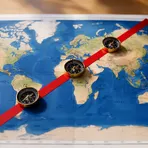
A path on Earth that keeps the same compass direction
 1
9.9
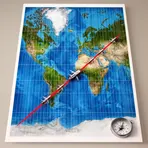
A line on Earth's surface that crosses north-south lines at the same angle to keep a steady compass direction
Surface Forms
Morphology
loxodrome = loxo + drome
The word is built from classical elements meaning roughly 'slant-course', but these parts are not recognizable English morphemes for most learners, so the navigational meaning is not inferable from them.
Etymology
The word loxodrome comes from Greek parts loxos 'slant' and dromos 'course', the same -drome you see in hippodrome ('horse track') and aerodrome ('old word for airfield'). So a loxodrome is a 'slanting course' on a globe, a path that keeps the same compass angle and spirals toward the pole.