
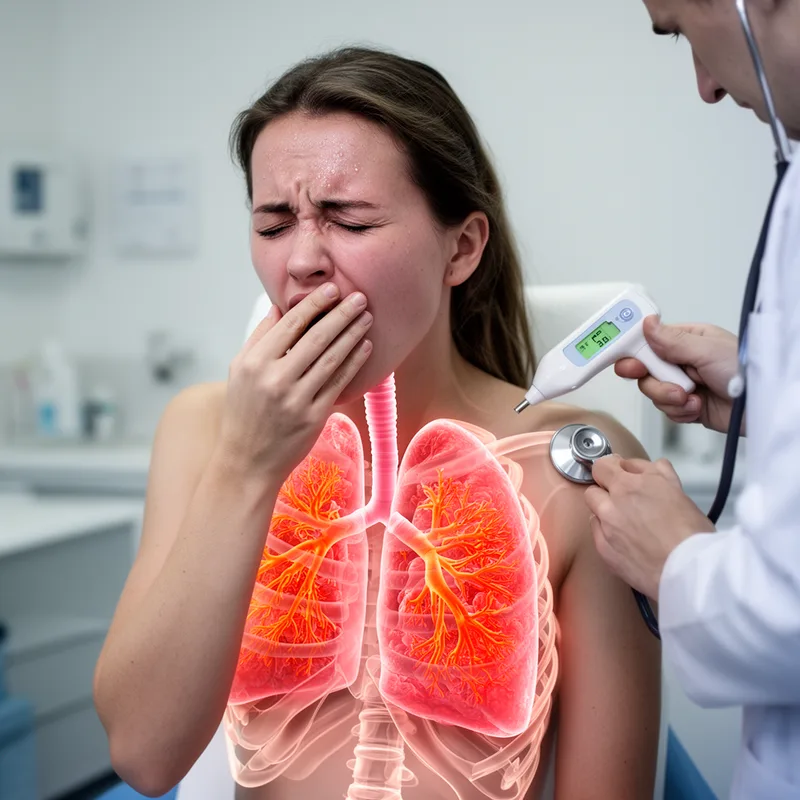
lower respiratory infection
- noun
- /ˈloʊər ˌrɛspəˈrɑːtəri ɪnˈfɛkʃən/
- Specialized
- Frequent handwashing can help prevent lower respiratory infection cases like bronchitis and pneumonia.
Examples
-
Further research into the exacerbation of respiratory infections after arsenic exposure is needed to determine whether arsenic-exposed populations are at greater risk of morbidity and mortality from lower respiratory infections.
Academic text (2013) -
Healthcare providers recommend vaccinations to reduce the risk of lower respiratory infection in vulnerable populations.
-
In children, exposure to secondhand smoke can lead to serious complications from lower respiratory infection issues.
Synonyms

 7
3.5
7
3.5

A sickness that affects the nose, throat, airways, or lungs
 2
8.9
2
8.9
A condition where infection, allergy or harmful fumes make the lungs swell
 2
7.7
2
7.7
Swelling of the small airways in the lungs caused by an infection that makes breathing hard
 1
3.5
1
3.5
Swelling of the breathing tubes that makes you cough and have trouble breathing
 1
4.1
1
4.1
A sickness of the parts used for breathing, like the nose and lungs, that causes cough and breathing problems

An infection that makes the windpipe and tubes to the lungs swollen and sore

An infection in the nose, throat, or lungs
Antonyms

How Serious
- Specialized
23
7.5

- Specialized
121
4.3
- Specialized
- Specialized
2
7.7
- Specialized
1
3.5
Surface Forms
Morphology
lower + respiratory + infection
The meaning 'an infection affecting the lower part of the respiratory tract' is directly and compositionally derived from 'lower' (below/closer to the bottom), 'respiratory' (relating to breathing/organs of respiration), and 'infection' (illness caused by pathogens). This is a straightforward modifier+noun medical phrase that follows common compositional patterns cross-linguistically, so a B1 learner who knows the constituent words would understand it.
Etymology
Lower respiratory infection literally means an infection in the lower part of the respiratory system, the lungs and the large air tubes that help us 'breathe'. So, it means an illness in those deeper parts, not in the 'nose' or 'throat'.