
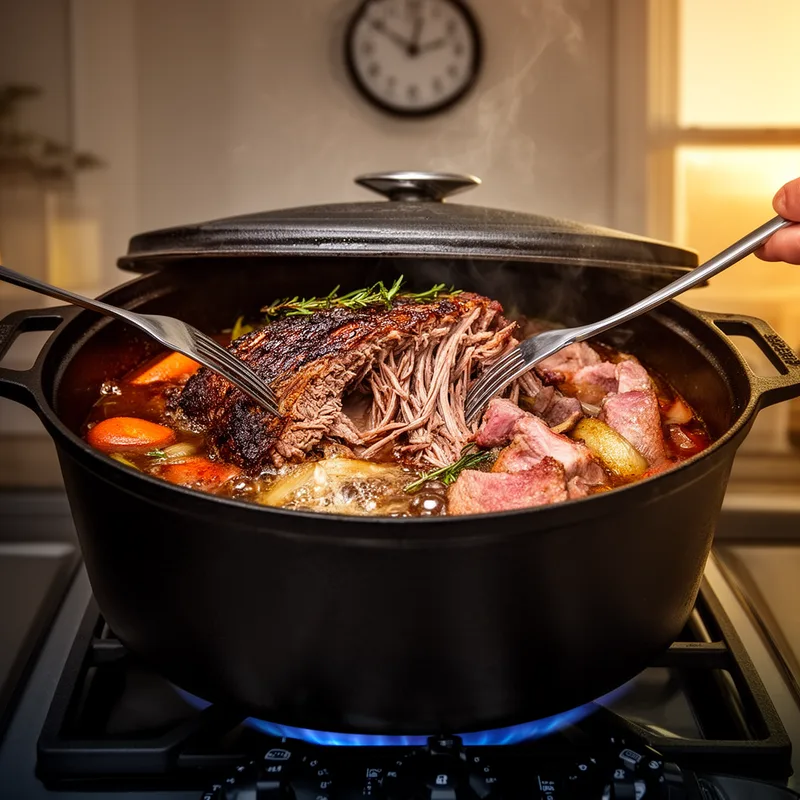
low and slow
 1
3.3
1
3.3

- idiom
- I find, though, that if I want a smoother texture with smaller crumbles, it has worked better for me if I cook the meat low and slow, kind of like scrambled eggs.
- cook low and slow
Loading YouTube…
Watch on YouTubeAnd I would cook the oats with the chi and the flax low and slow, like make it, you know, let them really, really cook and, and soak.
- And I would cook the oats with the chi and the flax low and slow, like make it, you know, let them really, really cook and, and soak.
Examples
-
I sautéed it low and slow until the whole mixture caramelized and then added a half can of chopped green chiles and seasoned with salt and pepper.
Blog text (2) -
She's a good country girl, and I'm certain she cooked it up just right, low and slow.
Blog text (24) -
My goal is to start to introduce these gently low and slow to rehabilitate her gut, to build it up and make it stronger.
-
It is much more like creating a low-and-slow barbecue.
Blog text (30) -
Eggs are 70% unsaturated fat but only 18-20% polyunsaturated; bacon grease and lard are only 10 to 15 percent polyunsaturated, and that is why you cook them low and slow.
Blog text (25) -
To make the ribs tender, you need to cook them low and slow for hours.
-
The secret to juicy brisket is cooking it low and slow on the smoker.
-
For the best results, try roasting the vegetables low and slow in the oven.
How Slow

Surface Forms
Morphology
The cooking sense 'done at a low temperature over a long period' is directly and predictably built from the constituents 'low' (low temperature) and 'slow' (taking more time), so a B1 learner who knows those words can infer the meaning. This is a standard adjectival coordination describing manner and has clear cross-linguistic parallels (e.g. 'a fuego lento' / 'low and slow' equivalents), supporting full transparency.
Etymology
Low and slow comes from the simple image of cooking with a small heat and a long time: picture a roast near a low flame, cooking slowly for hours. That's why low (small heat) and slow (long time) means to cook at a low temperature for a long time to make food 'tender' and full of 'flavor'.