
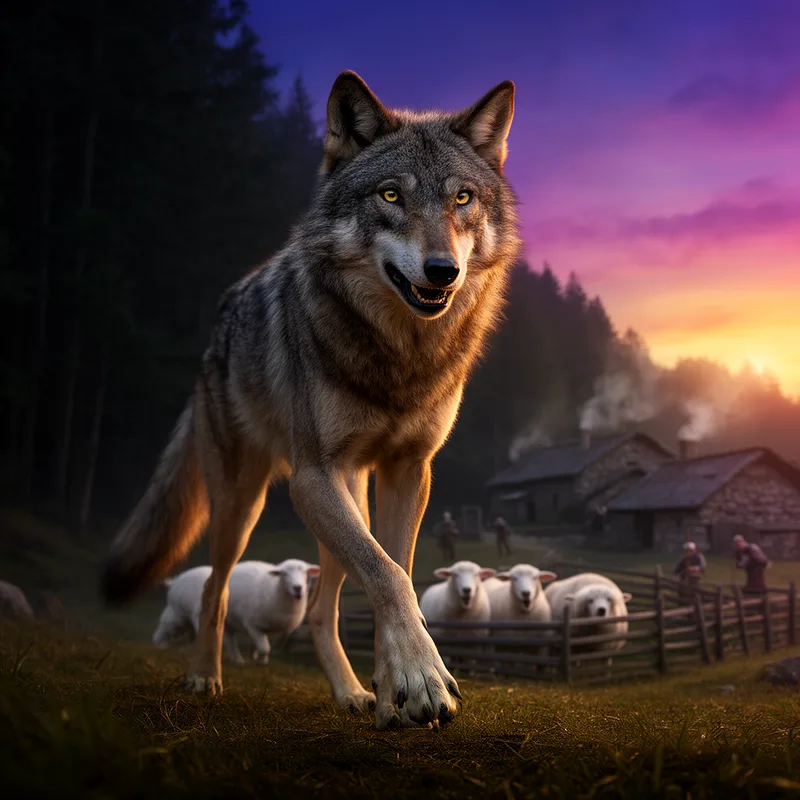
loup
- noun
- /luːp/
- Archaic
Examples
-
The shepherd warned the children about a hungry loup seen near the village at dusk.
-
In old tales, a fierce loup would prowl the forests at night.
-
The villagers believed that a loup was responsible for the missing sheep.
-
The loup prowled through the dark forest.
-
In ancient tales, the loup was feared by all.
-
The old tale spoke of a fierce loup that roamed the dark forests hunting for prey.
-
In folklore, a loup is often depicted as a cunning hunter, feared by villagers.
-
Many stories warn of the dangers of encountering a loup during a full moon.
Synonyms

 493
1.0
493
1.0

A large wild dog that usually hunts in packs
Compounds


Surface Forms
Etymology
Loup as an old word for a wolf comes from the Latin word lupus meaning 'wolf', so the origin directly names the wild animal. This explains why the word was used for the creature we now call a 'wolf'.