
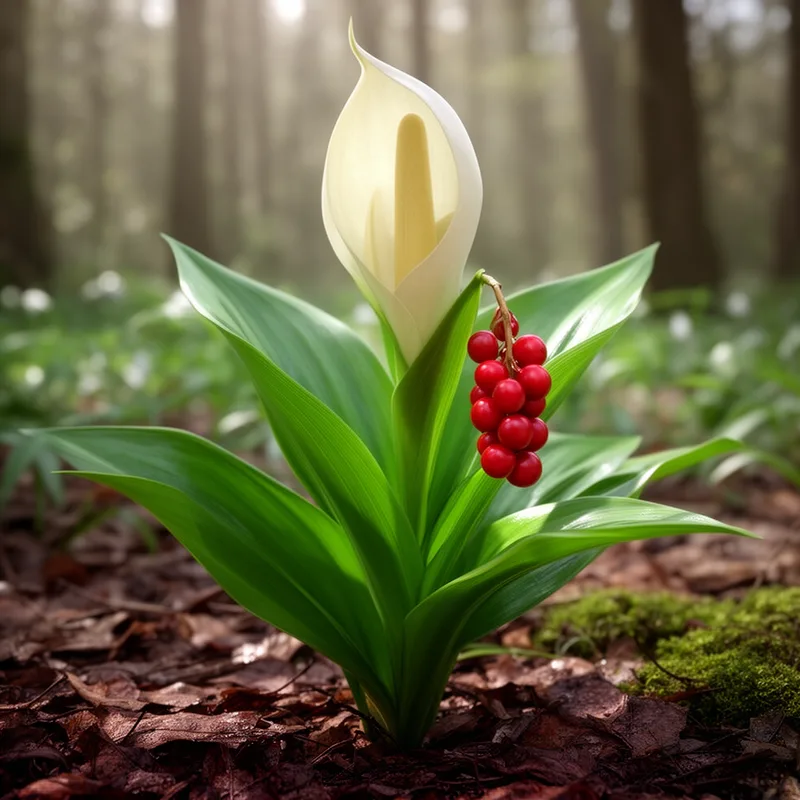
lords-and-ladies
- noun
- UK
- The arrow-shaped leaves of lords-and-ladies appear in early spring before most other plants.
Examples
-
Children are often warned not to touch lords-and-ladies because its berries are poisonous.
-
We spotted lords-and-ladies growing in the shady corners of the woodland.
-
The lords-and-ladies bloom beautifully in the spring.
-
Have you seen the lords-and-ladies in the forest?
-
The arrow-shaped leaves of lords-and-ladies emerge in early spring, marking the change of seasons.
-
Children are often warned not to touch lords-and-ladies because its berries can be harmful.
-
While hiking, we found clusters of lords-and-ladies thriving in the damp shade of the trees.
Synonyms
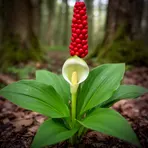
A common European woodland plant with arrow-shaped leaves, a small hooded flower, and poisonous red berries

A forest plant with spotted leaves and a small purple flower in spring
Surface Forms
Etymology
Lords-and-ladies comes from a simple picture people have used for the plant: it has a standing central stalk like a little 'lord' and a hooded leaf around it like a 'lady', and it often has both 'male' and 'female' flowers together. So the name helps you remember the plant's shape and that it contains both 'male' and 'female' parts.

