
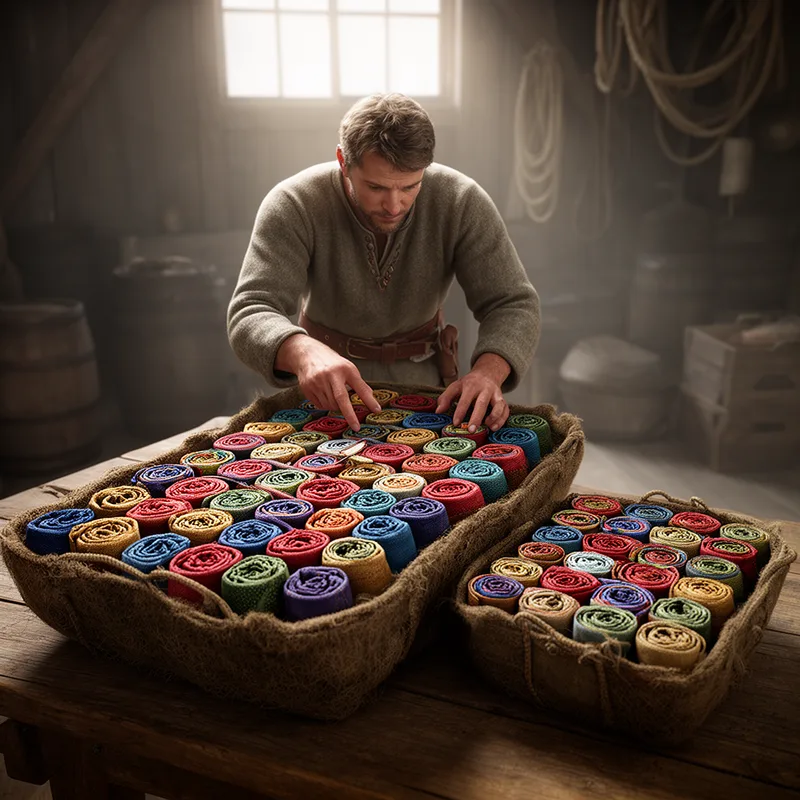
long hundred
- noun
- Archaic
- Historically, a long hundred was used in trade and referred to a count of 120.
Examples
-
A bale containing a long hundred of cloth would hold 120 pieces.
-
Scandinavian merchants sometimes counted in long hundreds, rather than the modern hundred.
-
A long hundred equals 120.
-
In some historical contexts, a long hundred was used.
-
In historical trade, a long hundred referred to a total of 120 units of goods.
-
Merchants used a long hundred as a measurement that counted up to 120 in their transactions.
-
A long hundred was an important measure in certain counting systems, equivalent to 120.
Synonyms

 286
1.0
286
1.0

A number that is one hundred twenty
 8
1.0
8
1.0
A number equal to 120, ten more than one hundred ten

An old way to mean 120, not 100, used when counting goods

The number one hundred and twenty
Surface Forms
Morphology
long + hundred
The adjective 'long' transparently signals an extended or larger version of 'hundred', so a B1 learner who knows both words may infer it means more than 100. However, the specific historical value 120 is arbitrary and requires cultural/historical knowledge, so the precise meaning is not fully predictable from the parts.
Etymology
Long hundred comes from old trade. Merchants often counted in groups of twelve, so ten groups of twelve made a bigger, or long, hundred of '120', which is why the term means '120'.