

localist
- noun
- /ˈloʊkəlɪst/
- Conservatives, by contrast, were proprietary localists.
- localist movement
- localist knowledge
Examples
-
In his famous two-part description of "Our Localism," Richard Briffault defined localism as a position in a debate: localists are "proponents of greater local power."
Academic text (2017) -
Any communitarian localist reform should be calibrated to protect against proprietary backlash.
Academic text (2017) -
From this perspective, the word "independent" also has a complex meaning in the context of localist politics.
Academic text (2010) -
The localist movement may have some general theoretical implications because it puts into circulation different types of knowledge about locations.
Academic text (2010) -
Strategic combinations of local knowledge and localist knowledge can provide a powerful basis for mobilizing political and consumer support for localist movements.
Academic text (2010) -
Present communitarian localists sometimes favor more local autonomy and sometimes favor less.
Academic text (2017) -
If the annexers were not precisely communitarian localists, they were at least in sympathy with that vision of the purpose of local government.
Academic text (2017) -
Here I argue that the fundamental disagreement between communitarian and proprietary localists manifests itself in present-day local government disputes.
Academic text (2017) -
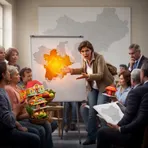
The localist advocated for a new policy that would give more power to community decisions.
-
As a devoted localist, she often spoke at town hall meetings to promote local businesses.
Synonyms


 1
7.1
1
7.1
A person who supports the local life and needs of one area over the whole country

A person who wants power moved from a central government to local governments
Antonyms

How Localist

Surface Forms
Morphology
Etymology
Localist comes from local, which means 'of a place', and the ending -ist, which means 'a person who supports' an idea or cause. So, a localist is someone who supports the interests or independence of their own town, region, or community.