

liverwort


 1
9.9
1
9.9
- noun
- /ˈlɪvərˌwɜrt/
- Specialized
- Richard Spruce, a "bryologist" (liverworts and mosses), could kill them if he wanted to, but didn't care to waste powder and shot.
- liverwort and moss
Examples
-
You can often find liverworts in moist, shaded areas, where they thrive alongside mosses and ferns.
-
Many large fallen logs lie across the forest floor, covered with dense growths of mosses, lichens, and liverworts encouraged by the very moist conditions.
Academic text (1990) -
According to the website, "the PLANTS Database provides standardized information about the vascular plants, mosses, liverworts, hornworts, and lichens of the U.S. and its territories."
Academic text (2011) -
Epiphytes are a diverse category that also includes various algae, lichens, liverworts, and mosses, plants that lack specialized vascular tissues.
Academic text (1991) -
To be fair, humanity does not have a monopoly on environmental impact; in parts of the Antarctic Peninsula, the resurgence of fur seals is destroying the moss and liverwort vegetation that undoubtedly increased when those animals were reduced to tiny remnant populations.
Academic text (1990) -
In the damp corner of the garden, small patches of liverwort were flourishing among the stones.
-
The forest floor was thick with liverworts, creating a lush green carpet under the trees.
Synonyms
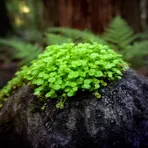
A small green plant like moss that grows in damp places
Compounds

- Specialized
A small green plant like moss with tiny flat leaves that grows on trees and rocks
Surface Forms
Morphology
Etymology
The word liverwort comes from old words liver and wort, meaning 'liver' and 'plant', because people long ago thought the plant's shape or colour showed it could help the liver. So a liverwort is a small green plant like moss that grows in damp places, and the name reflects that old idea.