

live oak
 7
6.0
7
6.0

- noun
- /laɪv oʊk/
- US
- On a hot summer day, we sat under the live oak tree, enjoying the cool shade it provided.
- live oak tree
- moss-draped live oak
Examples
-
Our trailer stood in a patch of live oaks, with gray moss hanging down.
Fiction book (1990) -
The shadows of the live oaks released long pools onto the watered grass.
Fiction book (1990) -
If I close my eyes, I can almost smell the live oak.
-
I stopped near the live oak and looked about, trying to see things.
Fiction book (1990) -
As there is no Church, l have been conducting the services underneath a live oak tree.
-
And the one tree in my yard, a live oak as big as my house, is shimmering with diamonds.
Fiction book (2002) -
We also have lots of pines and live oaks, which keep their leaves, so this is super nice.
Blog text (20) -
By the time I get to Government Street and its canopy of live oaks, the sky is turning dark gray.
Fiction book (1990) -
On either side, Spanish moss draped languidly from the live oaks' low branches.
Fiction book (2000) -
Sandy lanes wound under the heavy shade of live oaks, past summer cottages with picket fences and pleasantly unkempt yards.
Fiction book (1999)
Synonyms

A medium-sized evergreen oak tree with wide spreading branches and very hard wood
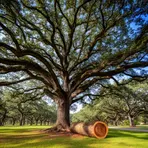
An evergreen tree from the southern United States with wide, spreading branches and very hard wood
How Big

Surface Forms
Morphology
The noun phrase is compositionally built: 'live' (living/evergreen) modifies 'oak' (a type of tree), so the meaning 'an oak that is living/evergreen' can be derived from the parts. A B1 learner who knows both words can reasonably infer it refers to an oak tree that stays green/all-year, making the expression transparent.
Etymology
Live oak gets its name from the tree keeping its leaves all year. People called it live because it looks 'alive' and stays green even in winter, so the name means an oak that stays green all year and is common in the southern United States.