
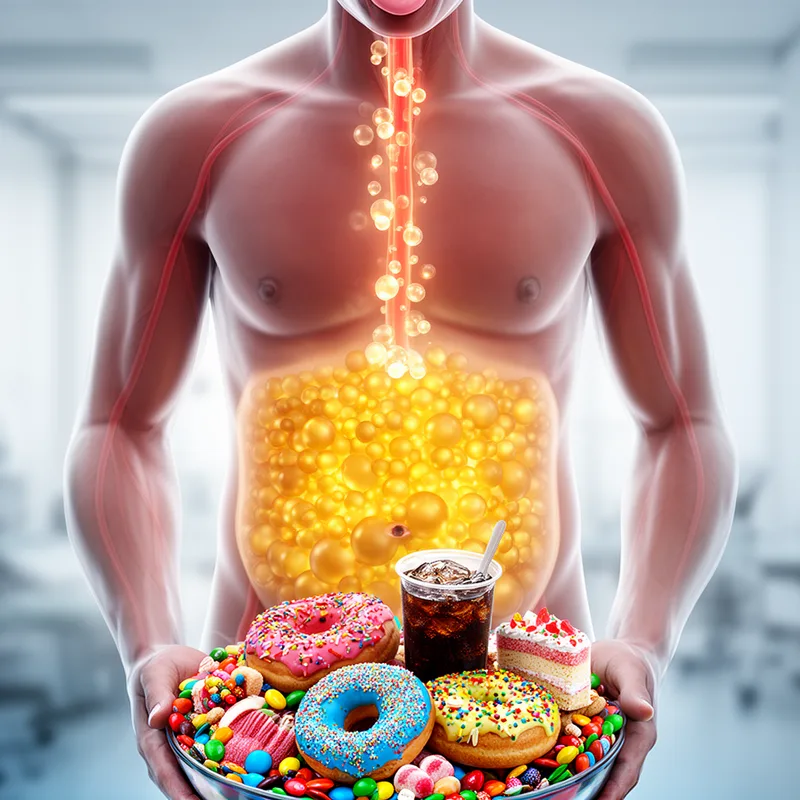
lipogenic


 1
9.5
- adjective
- /ˌlaɪpəˈdʒɛnɪk/
- Specialized
- A diet high in simple sugars can be lipogenic, leading to increased fat storage in the body.
Examples
-
Hepatic steatosis is often associated with resistance to the actions of insulin on hepatic gluconeogenesis, while hepatocytes remain sensitive to the lipogenic actions of insulin (115).
Blog text (27) -
The above is in particular reference to glucose; sucrose and fructose are more lipogenic due to some differences in metabolic pathways.
Blog text (7) -
Insulin is known for its lipogenic effects, as it helps convert excess carbohydrates into fat.
-
Certain foods, particularly those rich in carbohydrates, can have lipogenic properties and promote fat accumulation.
Synonyms
 1
9.5
Causing the body to make fat cells
Antonyms
Surface Forms
Morphology
lipogenic = lipogenesis (semi-transparent) = lipo + gen + ic
Formed from the combining form lipo- ('fat') plus the combining suffix -genic/ -gen + -ic; the scientific parts yield the predictable meaning 'promoting or producing fat', but the morphemes are technical and may not be familiar to general learners.
Etymology
Lipogenic comes from Greek parts lipo- meaning 'fat' and -genic meaning 'producing' or 'creating', and you can see lipo- in the word lipid. So, lipogenic literally means 'producing fat', which is why we use it for foods, drugs, or processes that make the body form or store fat.