
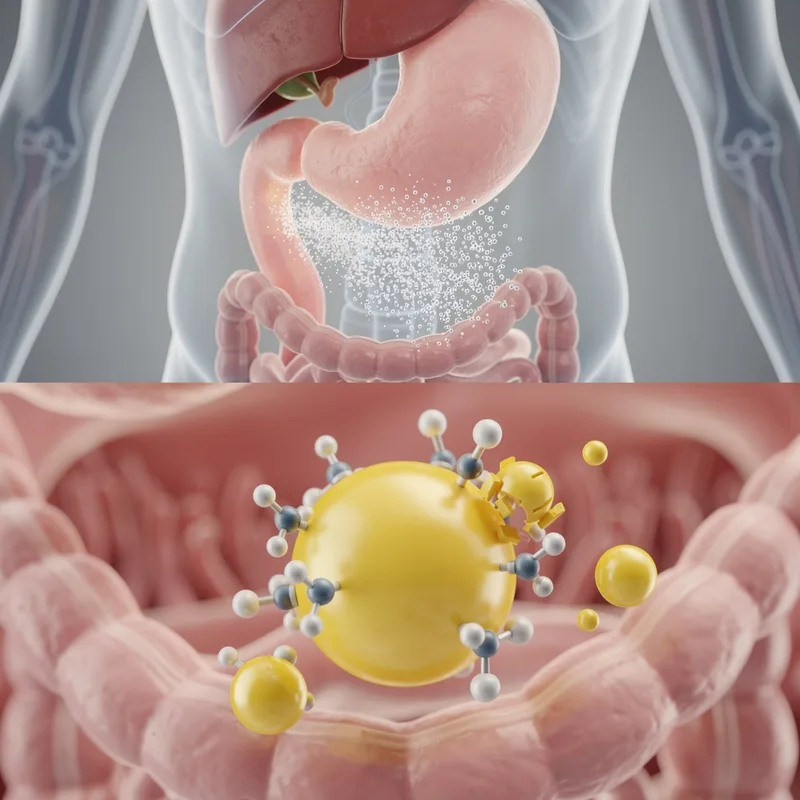
lipase
 2
7.5

- noun
- /ˈlaɪpeɪs/
- Specialized
- It is an inhibitor of gastrointestinal lipase enzymes, which normally catalyze the hydrolysis of dietary fat.
- lipoprotein lipase
- enzymes such as lipase
- amylase and lipase
Loading YouTube…
Watch on YouTubeThere are the lipases, which breakdown oils and fats.
- There are the lipases, which breakdown oils and fats.
Examples
-
Water and mucin, in addition to enzymes such as amylase, ribonuclease, and lipase, initiate the digestion of food by lubricating it and dissolving it into particles.
Academic text (1999) -
Postoperatively, the patient demonstrated a smooth recovery with resolution of her abdominal complaints and return to baseline of her lipase and amylase.
Academic text (2007) -
There are the lipases, which breakdown oils and fats.
-
Lipase is an important enzyme that helps the body digest fats by breaking them down into fatty acids and glycerol.
-
Children can develop digestive issues if their bodies do not produce enough lipase to break down dietary fats.
-
The doctor explained that lipase levels can indicate how well the pancreas is functioning in digesting fats.
Synonyms

An enzyme or drug that breaks down fat in the body
Surface Forms
Etymology
Lipase comes from the Greek root lipos meaning 'fat' and the ending -ase that names enzymes. So lipase is the enzyme that breaks fats into smaller parts, and the same root appears in lipid, a word for 'fat'.