
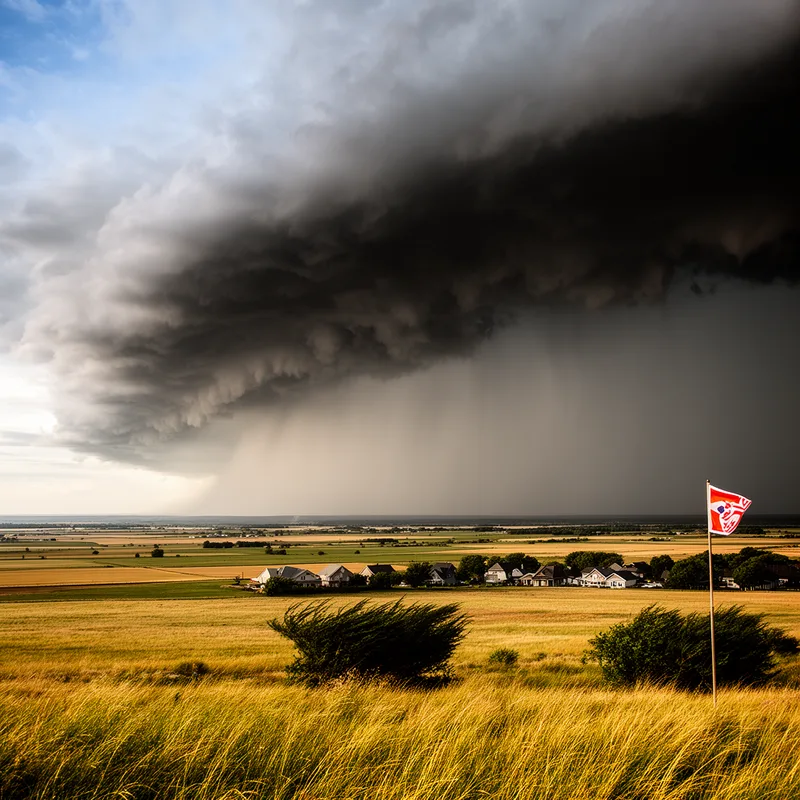
line squall
- noun
- /laɪn skwɔl/
- Specialized
- Meteorologists warned about the approaching line squalls.
Examples
-
Pilots are trained to avoid flying through a line squall due to turbulent conditions.
-
The weather service issued a warning about an approaching line squall along the cold front.
-
A powerful line squall moved through the region, causing heavy rain and strong winds.
-
A line squall hit the coast last night.
-
The weather forecast warned of a line squall approaching the coast, bringing heavy rain and strong winds.
-
Sailors should always be cautious of a line squall, as it can cause sudden and dangerous changes in weather conditions.
-
As the line squall moved in, the sky turned dark, and the temperature dropped sharply just before the storm began.
Synonyms
 20
7.0
20
7.0

A sudden strong wind often with rain or snow
 1
7.9
1
7.9
A narrow line of strong storms that brings heavy rain and strong winds
How Widespread

Surface Forms
Morphology
The sense 'a squall that forms a distinct line' is directly derivable from combining 'line' (a straight formation) and 'squall' (a sudden, violent gust), so the compound is descriptively compositional. This noun–noun formation follows common meteorological naming patterns (e.g. 'squall line') and would be understandable to a learner who knows both constituents.
Etymology
Line squall comes from the image of a long, straight band of strong wind and heavy rain. The word line shows the straight shape and squall means a sudden, strong storm, so a line squall is a fast-moving, narrow band of very bad weather that brings sudden changes.