
limnology


 1
9.9
- noun
- /lɪmˈnɑlədʒi/
- Specialized
- Algal blooms were occurring by the time formal research in limnology began in the 1880s (Carpenter et al. 2006).
- limnology and Oceanography
- limnology principles
- foundation of limnology
Examples
-
We present four main principles of landscape limnology for defining and studying freshwater ecosystem patches.
Academic text (2010) -
Limnology and Freshwater Biology is an upper-division Biological Sciences elective that covers the biology of freshwater environments.
Academic text (1999) -
Stephen R. Carpenter is a faculty member in the Center for Limnology.
Academic text (2009) -
Most of them saw themselves as working within their particular disciplines of limnology, atmospheric chemistry, or soil science.
Academic text (1993) -
Scientists from the disciplines of limnology, soil science, and atmospheric chemistry began to argue about his unconventional ideas.
Academic text (1993) -
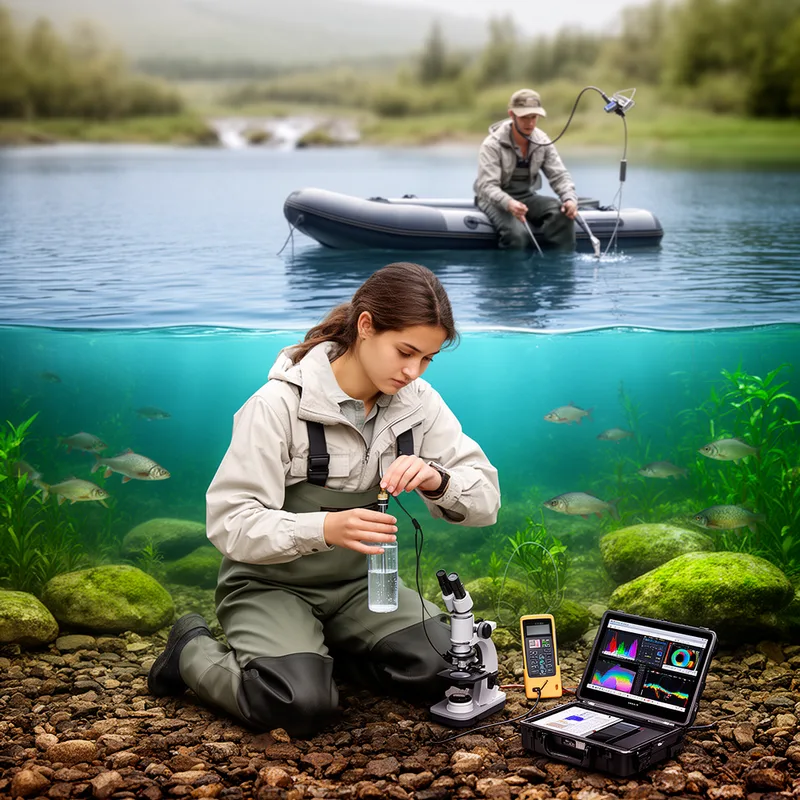
The study of limnology is crucial for understanding the health of freshwater ecosystems.
-
In her research, she focused on limnology to explore the biodiversity of lakes.
-
Students can learn about limnology and its importance in environmental science courses.
Surface Forms
Morphology
limnology = limn + logy
Although it is built from the technical root 'limn' and the suffix '-logy', the word is not transparently interpretable for an average B1 learner because the first element is not a common English word.
Etymology
Limnology comes from the Greek root limne meaning 'lake' or 'marsh' and the ending -logy meaning 'study of'. So limnology is literally the 'study of lakes', which is why it is the science of inland fresh water and its life.