
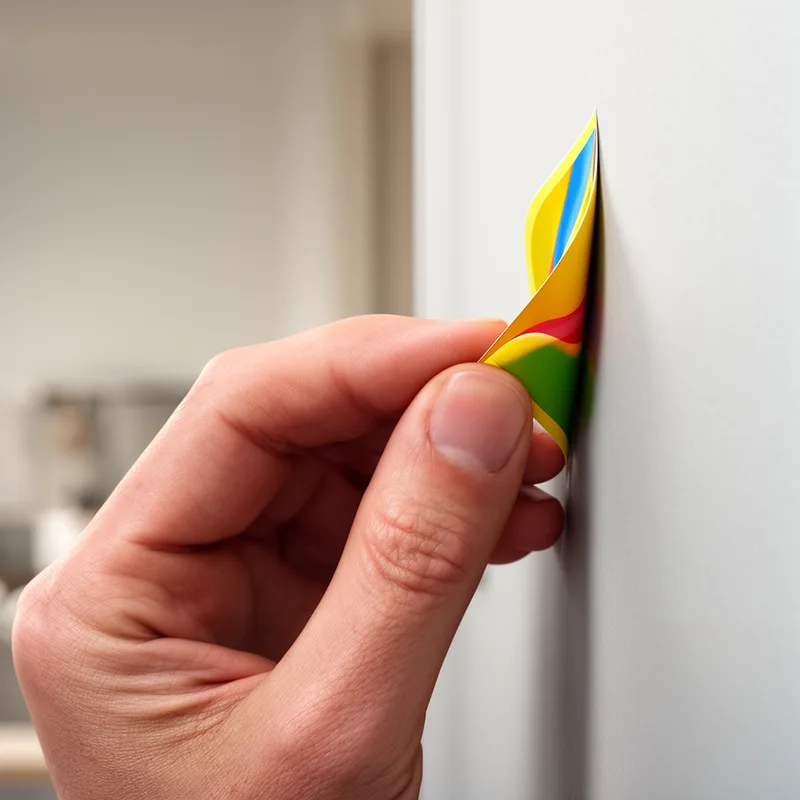
like stink on shit
- idiom
- Offensive
- Those stickers adhere to the wall like stink on shit—they're nearly impossible to remove.
Examples
-
The rumor stuck to the politician like stink on shit, no matter what he did.
-
He clings to her like stink on shit.
-
He followed her like stink on shit, never letting her out of his sight.
-
She follows him like stink on shit everywhere!
-
The rumor stuck to the politician like stink on shit, no matter what he did.
-
He followed her like stink on shit, never letting her out of his sight.
-
Those stickers adhere to the wall like stink on shit—they're nearly impossible to remove.
Synonyms

 126
1.0
126
1.0

Covered with a substance that keeps it on other things
 1
6.6
1
6.6
Sticks firmly to a surface
A sticky, dirty substance
Antonyms


How Persistent

Surface Forms
Morphology
The expression works by a crude metaphor: something adheres as persistently as a foul odor ('stink') to feces ('shit'), so a learner who knows the constituent words can plausibly infer the sense of strong, persistent clinging. However, the meaning is conveyed via a vivid, culture-specific vulgar image and a non-literal figurative mapping, so it is not fully predictable for all B1 learners without exposure.
Etymology
Like stink on shit comes from the plain image of stink, a very strong bad smell, clinging to shit so it seems impossible to remove. So it is used to say something 'clings closely' or 'won't go away'.