
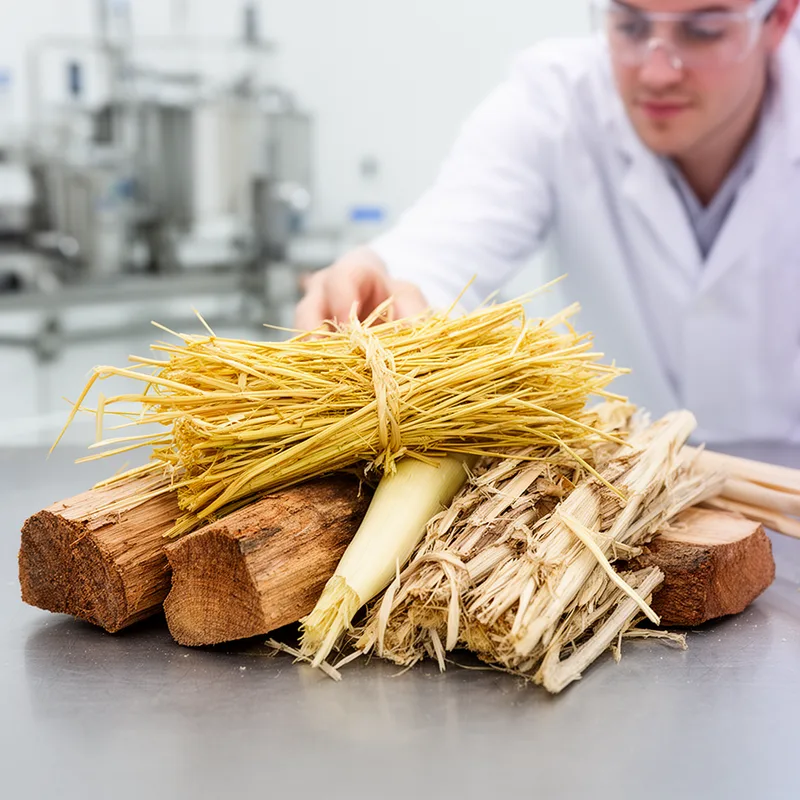
lignocellulosic
- adjective
- /ˌlɪɡnoʊˈsɛljuˌloʊsɪk/
- Specialized
- 2. J. Szczodrak and J. Fiedurek, "Technology for conversion of lignocellulosic biomass to ethanol," Biomass and Bioenergy, vol. 10, no. 5, pp. 367-375, 1996.
Examples
-
Biochemical conversion of lignocellulosic materials into secondary fuels is gaining interest due to its sustainable benefits.
-
Biochemical conversion of lignocellulosic materials into secondary fuels and chemicals is less interesting compared to thermochemical conversion, due to low carbon conversion and slow conversion rates.
Academic text (2018) -
Research on lignocellulosic plant material has shown it can help reduce dependence on fossil fuels.
-
Farmers are increasingly interested in cultivating lignocellulosic crops to support the growing bioenergy sector.
Surface Forms
Morphology
lignocellulosic = lignocellulose (opaque) = ligno + cellulo + sic
The base word 'lignocellulose' is a technical term not widely known or transparently analyzable by most learners.
Etymology
Lignocellulosic combines Latin lignum ('wood') and cellulose (from cell, 'small room' or the basic part of a plant), so you can remember it as 'wood + cells'. That is why lignocellulosic means plant material made mainly of those wood-and-cell parts, like cellulose and lignin.

