
leukopenia
- noun
- /ˌluːkəˈpiːniə/
- Specialized
- Of the 10 patients with septicemia, 5 had leukocytosis, 1 had leukopenia, and 3 had normal leukocyte counts; for 1, the leukocyte count was unavailable.
Examples
-
The patient was monitored closely for leukopenia, as it could make him more susceptible to infections.
-
Hematologic 36: Anemia, thrombocytopenia, leukopenia
Academic text (2017) -
Laboratory abnormalities include leukopenia, an elevated C-reactive protein level, and an elevated erythrocyte sedimentation rate.
Academic text (2009) -
Fever, headache, myalgia, vomiting, thrombocytopenia, and leukopenia were the most frequent signs and symptoms among patients with confirmed dengue, as described (9).
Academic text (2014) -
Characteristics that identify a febrile outbreak as dengue include predominant leukopenia, maculopapular rash, retro-orbital headache, and a relatively long period of incapacitation after defervescence.
Academic text (2012) -
After a thorough examination, the doctor diagnosed her with leukopenia, which indicated a dangerously low level of white blood cells.
-
The laboratory tests confirmed leukopenia, prompting the doctors to adjust the treatment plan to support his immune system.
Antonyms


How Many

Surface Forms
Morphology
leukopenia = leuko (opaque) = leuko + penia
The term 'penia' is not a standalone English word and requires specialized medical knowledge.
Etymology
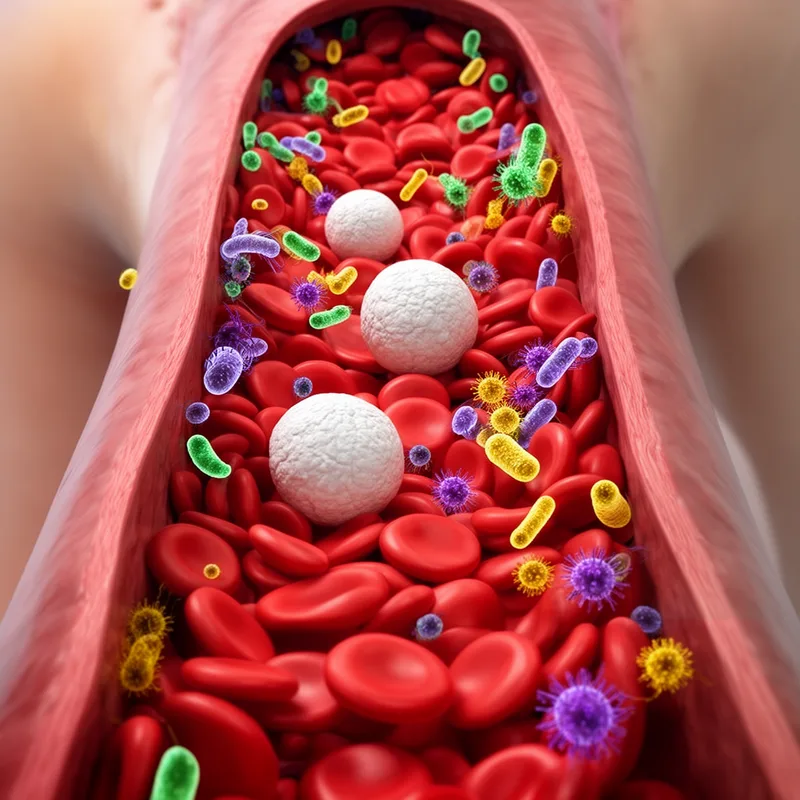
Leukopenia comes from Greek parts leuko- meaning 'white' (as in leukocyte or leukemia) and -penia meaning 'lack'. So leukopenia means a 'lack of white' blood cells, which is why the condition is a low white cell count and makes infections more likely.