
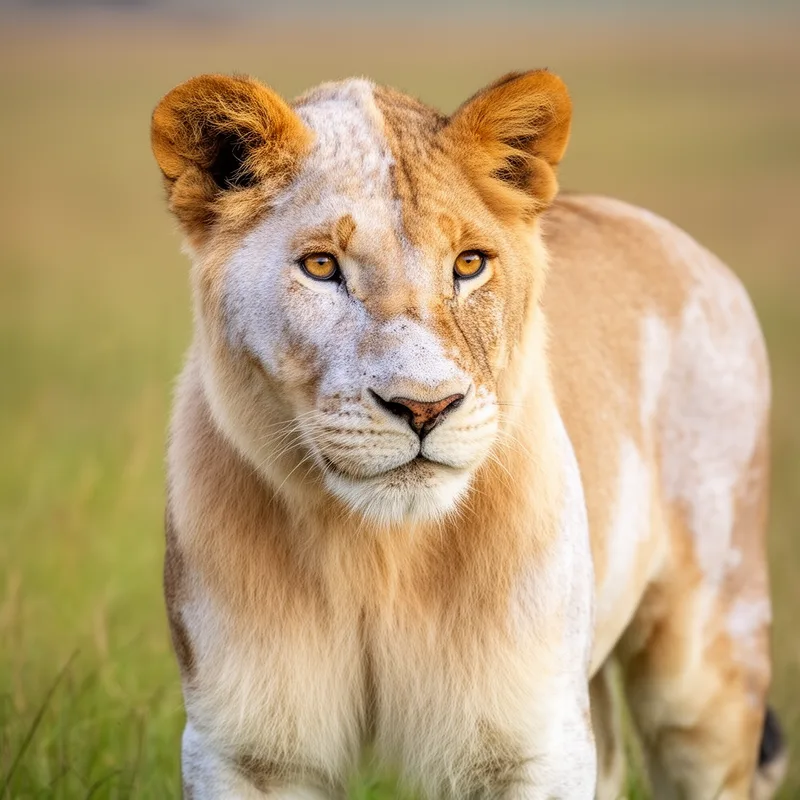
leucism


 1
9.9
1
9.9
- noun
- /ˈluːkɪzəm/
- Specialized
- Unlike albinism, leucism results in a reduction of pigments without a complete absence, giving animals a faint coloration.
Examples
-
The white fox is a striking example of leucism, showcasing its pale fur and unique appearance.
-
Willow has a condition called leucism, which causes a reduction in all skin pigments.
Blog text (7) -
How is leucism different from albinism, you may ask?
Blog text (7) -
So why are we so fascinated with albinism and leucism?
Blog text (7) -
Albinism only affects the production of melanin, while leucism prevents the formation of all pigments.
Blog text (7) -
Leucism can be observed in various animals, leading to lighter skin and feather coloration.
Synonyms
 1
8.2
1
8.2
Loss of colour in the skin or hair that makes them look lighter
 1
8.8
1
8.8
A part of the skin that is lighter than normal because it has less color
 1
9.9
1
9.9
An unusual lack of color in the skin that makes it look very pale

A skin condition present from birth where patches of skin lose their color
Surface Forms
Morphology
leucism = leuc + ism
The form 'leuc-' is a scientific combining form meaning 'white' and is not a recognizable standalone English base for average learners, so the meaning of 'leucism' is not transparently deducible from familiar English components.
Etymology
Leucism comes from the Greek root leukos meaning 'white'. The ending -ism means 'a condition', so leucism is the condition that makes an animal's skin, fur, or feathers look pale or have white patches.