
leucine
 1
6.0

- noun
- /ˈluːsiːn/
- Specialized
- Athletes often include leucine in their diets to promote muscle growth.
- leucine substitution
Loading YouTube…
Watch on YouTubeSo what you're seeing here is now these meals are meeting a leucine threshold of muscle protein synthesis.
- So what you're seeing here is now these meals are meeting a leucine threshold of muscle protein synthesis.
- So lutein for vision, leucine for muscles and muscle growth and strength, etcetera.
- Our body has no idea if that was a leucine molecule from chicken or if it was from soy.
- So once you reach that leucine threshold, you trigger this, this complex called mtor.
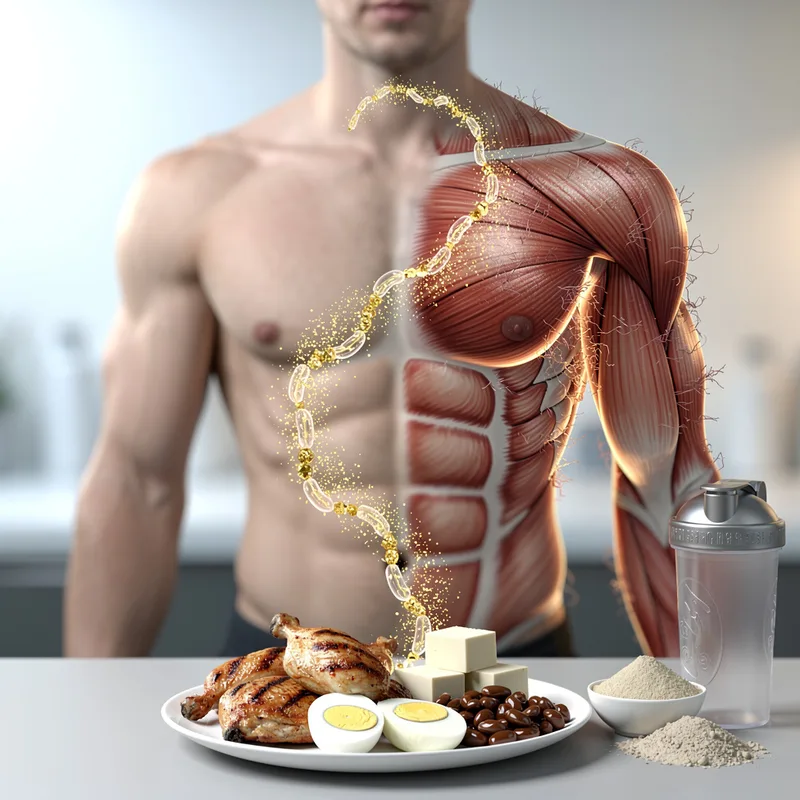
- Essentially, leucine acts as a switch kick starting the muscle protein building process.
- And if you're really concerning yourself with hypertrophy, I think the three most important amino acids would be leucine, lysine and methionine.
- Phenylalanine we talked about for dopamine and leucine, again, they all have diverse roles.
- It's exquisitely sensitive to leucine in areas like pancreas or liver.
- So again, I, I don't like to simplify things too much, but Leucine appears to really be driving this ship.
Examples
-
The branched-chain amino acids (BCAAs) leucine, isoleucine, and valine make up more than one third of muscle protein.
Blog text (23) -
The body needs leucine to help build and repair muscle tissue.
-
Essentially, leucine acts as a switch kick starting the muscle protein building process.
-
For 35 years now, it has been known that leucine has anti-catabolic properties.
Blog text (23) -
A diet rich in vitamin D and the amino acid leucine has also been shown to increase muscle mass and improve muscle function.
Academic text (2017) -
Proteins rich in the essential amino acid leucine may offset muscle loss, promote positive muscle protein balance, and reduce sarcopenia.
Academic text (2017) -
Many foods, such as dairy products and meat, provide leucine as an essential amino acid.
Surface Forms
Etymology
Leucine comes from the Greek root leuk- meaning 'white', because scientists first found it as white crystals. That name helps you remember it is a small building block, an essential 'amino acid' that the body must get from food to make proteins.