

letter of marque
- noun
- /ˈlɛtər əv mɑrk/
- Archaic
- Before countries began to develop standing navies, in the seventeenth and eighteenth centuries, the primary way to wage a war at sea was to hand out "letters of marque and reprisal," authorizing privateers to attack enemy ships.
Examples
-
Reviving letters of marque is another possible option that is authorized by the U.S. Constitution (Article 1, Section 8).
Academic text (2009) -
During the conflict, the king granted a letter of marque to privateers, allowing them to capture enemy vessels legally.
-
To combat enemy trade during the war, many governments resorted to issuing letters of marque to incentivize private individuals to join the fight.
-
The famous pirate received a letter of marque from his government, legitimizing his attacks on foreign ships.
Synonyms


 1
9.9
1
9.9
Official permission given by a government for private ship owners to capture enemy ships and goods
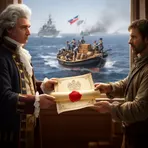
A government paper that lets a private ship owner capture enemy ships and goods during war

An official paper from a monarch or government that gives someone the only right to make something
Surface Forms
Morphology
letter + of + marque
While 'letter' suggests a written document, the specific historical-legal meaning 'a government license to capture enemy ships' is not predictable from the parts. 'Marque' is a rare/French-derived term and the whole phrase is a specialized legal idiom, so a B1 learner who only knows the constituents would not reliably infer its meaning.
Etymology
The term letter of marque comes from an old practice where a government gave a written letter called a marque to a private ship captain, allowing them to capture enemy ships. So, the phrase now means 'an official license to capture enemy ships'.