
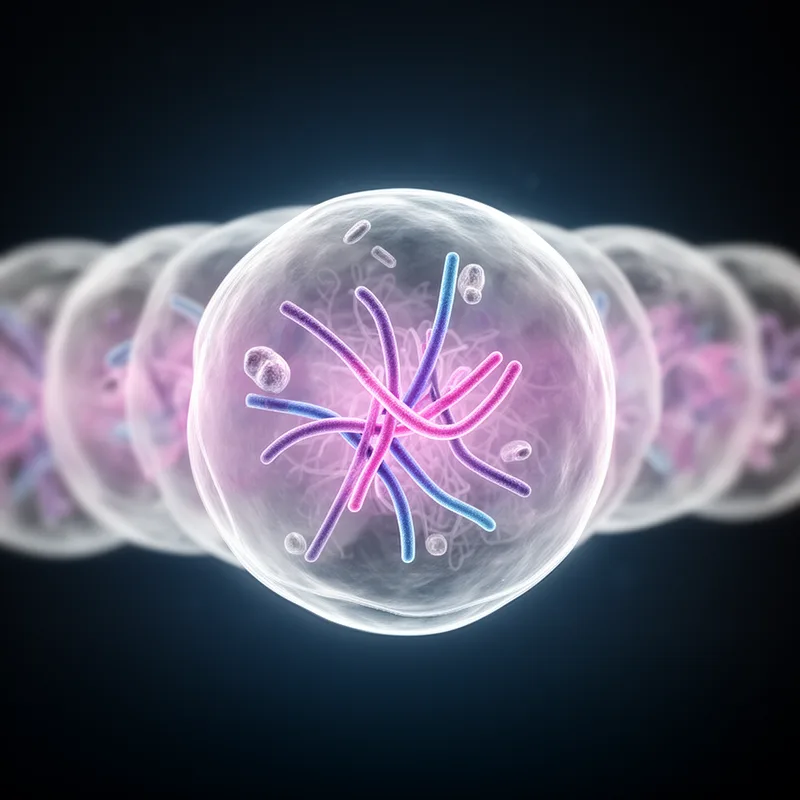
leptotene
- noun
- /ˈlɛp.təˌtiːn/
- Specialized
- The transition from leptotene to zygotene is marked by the pairing of homologous chromosomes.
Examples
-
During the leptotene stage, chromosomes start to condense and are visible under a microscope.
-
The leptotene stage is the initial phase of prophase in meiosis when chromosomes first begin to become visible.
-
Researchers observed defects in meiotic division during the leptotene phase of cell development.
-
During leptotene, chromosomes start to condense.
-
The leptotene stage is crucial for meiosis.
-
During the leptotene stage, chromosomes begin to condense into visible thin threads under a microscope.
-
Researchers observed that during the leptotene phase, chromosomes became clearly visible as they started to condense.
Surface Forms
Morphology
leptotene = lepto + tene
A specialised biological term built from Greek combining forms ('lepto-' + '-tene'); the components are not productive standalone English words and the meaning is domain-specific, so ordinary learners cannot derive the sense from the parts.
Etymology
Leptotene comes from the Greek root lepto- meaning 'thin', and it was named because chromosomes look like very thin threads in this early stage of meiosis, so the name helps you remember their thread-like appearance.

