

leprosy
 19
7.0
19
7.0

- noun
- /ˈlɛprəsi/
- Specialized
- When the villagers consumed water from the village well, several cases of leprosy developed.
- leprosy bacterium
- leprosy epidemic
- leprosy outbreak
Loading YouTube…
Watch on YouTubeLet's see, he's getting leprosy or something.
- Let's see, he's getting leprosy or something.
- I saw leprosy with my own eyes, you dumb fucks.
- Another factoid is when we put out combined treatment for leprosy.
- And in those days, the rumor was that Mother Teresa, when she kissed children with leprosy, they would be healed.
Examples
-
Passersby pull away as they see his face, mistaking the open blisters for leprosy.
Fiction book (2002) -
Scores of people died of leprosy, their bodies falling apart, and there was no cure.
Fiction book (1994) -
Accordingly, this study will first describe what modern medical science has discovered concerning leprosy.
Academic text (2006) -
Modern science has also proven that leprosy is contagious, as ancient and medieval societies suspected.
Academic text (2006) -
Leprosy is not infectious.
-
A gentleman in that region supposedly contracted leprosy from a collar ironed by a Chinese laundryman.
Academic text (2002) -
The immigrants' position grew more tenuous in 1888 when one of the Hawaiians contracted leprosy.
Academic text (2008) -
Mycobacterium tuberculosis (tuberculosis TB) and Mycobacterium leprae (Hansen's disease or leprosy) are the most common mycobacteria in humans.
Academic text (2005) -
In the 19th century, many colonies isolated people with leprosy to prevent the disease from spreading.
-
Doctors are working to find new treatments for leprosy, which can lead to severe health complications if left untreated.
Synonyms
 2
6.4
2
6.4
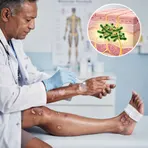
A long-term disease caused by a germ that makes skin sores and harms nerves, also called leprosy
Compounds

- Specialized
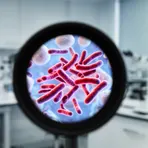
A severe disease that causes many skin sores and can affect nerves and other body parts
- Specialized
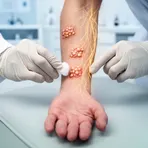
A skin disease with small hard bumps and nerve damage causing numb areas
How Severe

Surface Forms
Etymology
Leprosy comes from an old root lepra meaning 'scale' or 'scaly', because the illness often made the skin look like rough, scaly patches. That's why leprosy is the name for a long-lasting skin disease, and you can see the same root in the word leper, which helps explain its meaning as a serious skin illness that can cause scaly sores and nerve damage.