
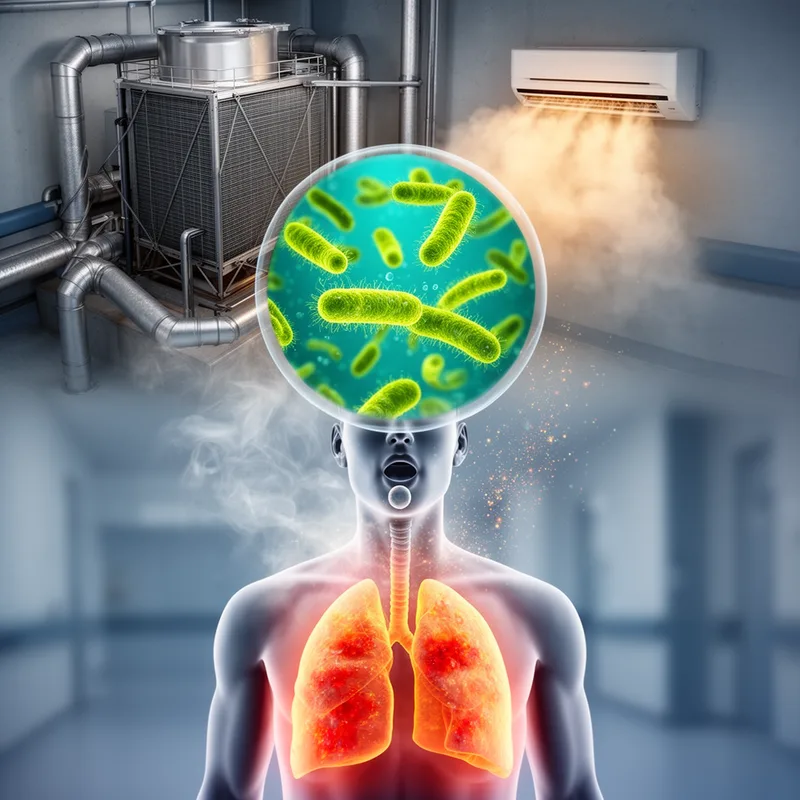
legionella
 1
9.4

- noun
- /ˌliːdʒəˈnɛlə/
- Specialized
- The immunomagnetic separation (IMS/ATP) method can also be used to rapidly detect Legionella pneumophila and Pseudomonas aeruginosa in pool water (Lee & Deininger, 2001).
- Legionella pneumophila
Examples
-
Initially, silver concentrations were not allowed to exceed 10 ppb and Legionella counts were reduced from 40,000 cfu/L to 7 cfu/L, a significant 3.8-log reduction.
Academic text (2001) -
Table 1 compares chlorine dioxide with three other technologies used to control Legionella in potable water.
Academic text (2002) -
For example, we recently diagnosed a case of Legionella micdadei infection, which had never been known to cause an abscess.
Academic text (2003) -
Legionnaires' disease is a particularly nasty infection caused by Legionella bacteria, found in freshwater throughout the world.
Blog text (10) -
Although some cases of hemorrhage have been reported during pregnancy, rifampicin has been used safely for the treatment of severe Legionella infection.
Academic text (2007) -
Radiologically, these pneumonias are confined to one lung (often only one lobe of one lung, although Legionella and viral pneumonias can involve several lobes).
Blog text (29) -
Numerous facilities operating secondary water distribution systems are searching for the appropriate point-of-entry (POE) disinfection technology to reduce the occurrence of Legionella and other pathogens at distal sites.
Academic text (2002) -
Acute- and convalescent-phase serum specimens were tested for C. burnetii and Legionella pneumophila by indirect immunofluorescence assay (IFA) as described (5).
Academic text (2014) -
The specific source of the legionella bacteria has not been pinpointed.
-
Legionnaires' disease is a particularly nasty infection caused by legionella bacteria, found in freshwater throughout the world.
Synonyms


 1
7.3
A germ that lives in water and causes Legionnaires' disease
Compounds
- Specialized
1
7.3
A germ that lives in water and causes Legionnaires' disease
Surface Forms
Etymology
The word legionella comes from Legion because the bacteria were first found after a sickness outbreak at an American Legion convention in 1976. The ending -ella comes from Latin and means 'small', so the name suggests a 'small legion' and helps you remember that legionella is the bacterium behind 'Legionnaires' disease' and can spread in water systems.