
leechee
- noun
- /liˈtʃi/
- Archaic
- He peeled the brittle shell from the leechee and popped the sweet fruit into his mouth.
Examples
-
She offered me a bowl of fresh leechees for dessert after dinner.
-
The market had dried leechees imported from China.
-
I bought some fresh leechees at the market.
-
Have you ever tasted a leechee?
-
He peeled the brittle shell from the leechee and popped the sweet fruit into his mouth.
-
She offered me a bowl of fresh leechees for dessert after dinner.
-
The market had dried leechees imported from China.
Synonyms

 2
4.7
2
4.7

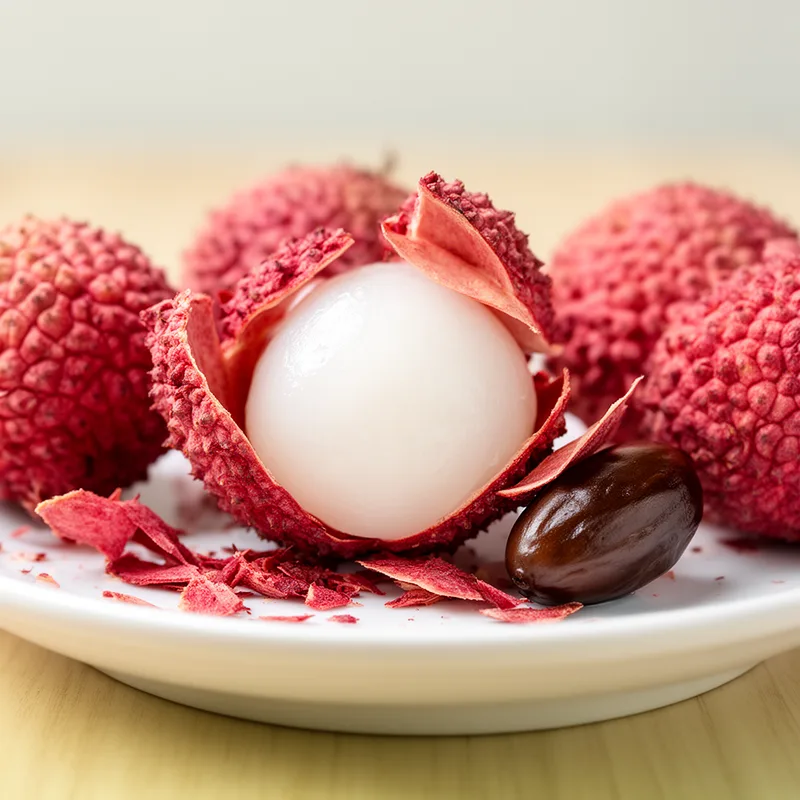
A small round fruit with a rough red shell, soft white inside, and one large seed


 1
7.4
1
7.4
A small round Chinese fruit with a thin shell, soft sweet inside, and one seed

A small round fruit with thin red skin and sweet flesh

A small round fruit with thin rough skin, sweet white flesh, and a single hard seed
Surface Forms
Etymology
The word leechee comes from the Chinese name lìzhī and the Cantonese form lai chi, which sound like 'lee-chee' in English, and English borrowed that name for the small red fruit with a thin shell and sweet white flesh. So remembering that leechee is the original Chinese name helps explain why the word refers to that particular sweet fruit.