
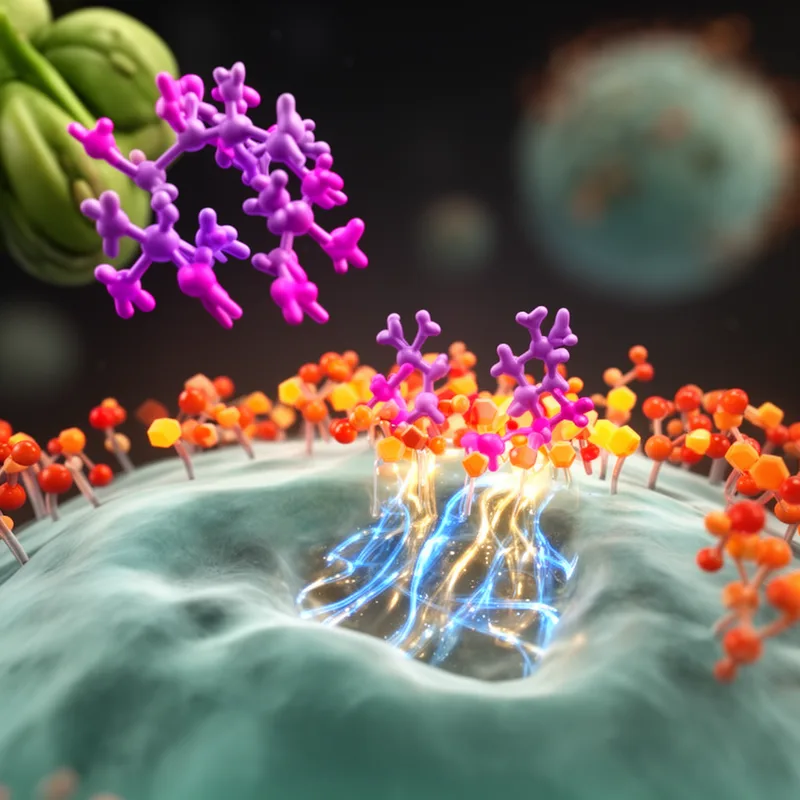
lectin
 1
8.3

- noun
- /ˈlɛk.tɪn/
- Specialized
- Plant lectins bind specifically to carbohydrates, influencing various biological functions.
Loading YouTube…
Watch on YouTubeSo just Google plants that contain high lectins and avoid those in your diet.
- So just Google plants that contain high lectins and avoid those in your diet.
- I'm not sure people appreciate that lectins are proteins.
- And some of those compounds are these proteins called lectins that can cause leaky gut.
- So they found out that with people with arthritis, there are proteins called lectins, which are in grains, they're in legumes, they're in a lot of plants.
- So I was a lectin free vegan following Doctor Gundries who got me when I had my thyroid problem, really healthy.
- So I think we can put to rest the the lectin fear.
- So some plants, a lot of grains have the ability to inflamed you with lectins, but that's an immune thing.
- And actually, what you're saying is in this situation, the, you know, the diet with the higher amount of lectins actually led to lower information.
- Oh my God, with lectins, fruits, Oh my God, they have sugar nuts, Oh my God, they have fat eggs.
- This is the first modern book to talk about lectins and oxalates and Omega sixes to avoid them in the first chapter.
Examples
-
Once he received the seed, Hein grew the plants in greenhouses and within several months tested them for lectins.
Academic text (1996) -
Take, for example, the winged bean, Psophocarpus tetragonolobus, a plant with high levels of proteins called lectins, which medical researchers use as diagnostic tools because they bind to certain blood cells and specialized transport cells.
Academic text (1996) -
He found several that produced high levels of a specific lectin he wanted.
Academic text (1996) -
Your body is confused by what the lectins are doing and starts to go after healthy proteins as well.
Blog text (11) -
I'm not sure people appreciate that lectins are proteins.
-
"We're trying to determine if plant lectins cause a similar response in humans," Hein says.
Academic text (1996) -
And some of those compounds are these proteins called lectins that can cause leaky gut.
-
As we eat more legumes, dairy, and grains, there is something that comes with these foods: lectins.
Blog text (11) -
In his lab studies, Hein fed the lectin to mice and found that it binds to M-cells in the animal's small intestine.
Academic text (1996) -
So they found out that with people with arthritis, there are proteins called lectins, which are in grains, they're in legumes, they're in a lot of plants.
Synonyms

 1
9.9
A plant protein used in labs to stick to sugar parts of proteins and cell surfaces
Surface Forms
Morphology
lectin = lect + in
Formed from the combining form 'lect-' plus the protein-forming suffix '-in', but the root is not a standalone English word and the specific biochemical meaning is not derivable by an average B1 learner from the parts.
Etymology
The word lectin comes from a Latin root lect- meaning 'to choose', the same root you find in select. So a lectin is a protein that 'chooses' and sticks to certain sugars, which helps you remember that it only attaches to some sugars and not others.