
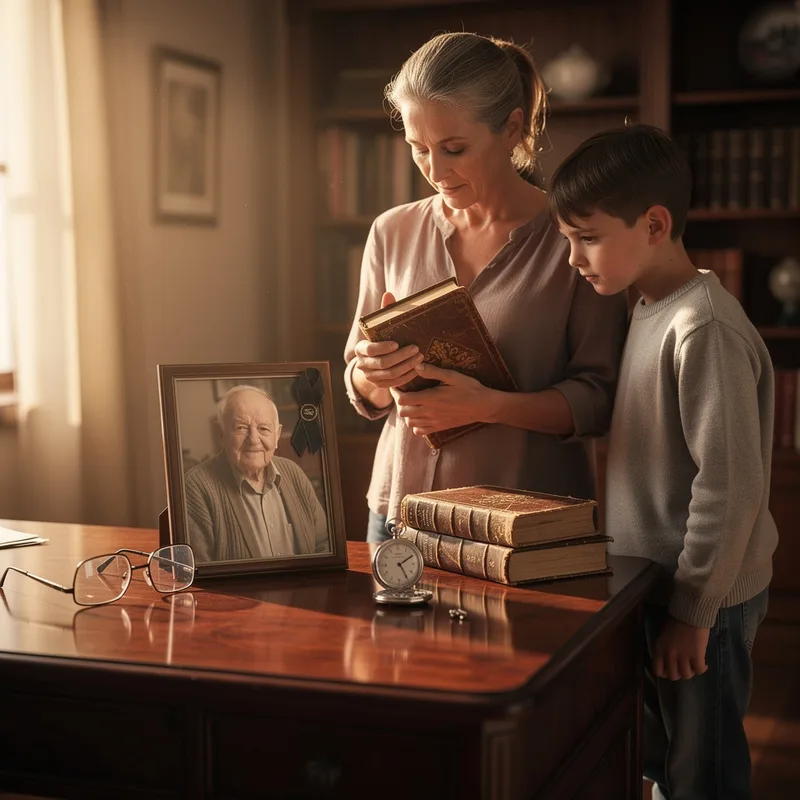
to leave behind
 56
3.7
56
3.7

- phrasal verb
- /liːv bɪˈhaɪnd/
- He expired six hours after transfer to Stanford, leaving behind a disconsolate wife and two small children.
Loading YouTube…
Watch on YouTubeLike, I'm thinking a lot about what you leave behind.
- Like, I'm thinking a lot about what you leave behind.
- And he has he talked about in some of his writings he left behind how he wanted to be a different king than every other king.
Examples
-
Do you even think about the pain that you've caused, about the families that you leave behind?
-
Leaving behind a heartbroken husband and a very ill little girl.
-
His health, his most critical asset, had failed him, leaving behind a young family and a successful career.
-
Anyway, the man who ran it died, and, uh... he... he left behind two sons.
-
He leaves behind a family of four.
-
Their daughter, Jessica, had been left behind with his parents in New York.
Fiction book (1994) -
Through her love of life and laughter, she left behind an inspiring legacy of hope.
Blog text (6) -
He leaves behind an infant son.
-
Sixty-eight years old, Hamersley leaves behind a wife and four children.
Fiction book (1998) -
After his passing, he leaves behind a loving wife and two cherished children.
Synonyms
 546
5.5
546
5.5
To give property or money to someone when you die
 24
8.9
24
8.9
To leave property or money to someone in your will when you die
Antonyms


Surface Forms
Morphology
The meaning 'to be survived by' follows directly from combining 'leave' (to go away or to cause something to remain) with 'behind' (remaining after departure): together they mean to cause something to remain after one leaves. This verb+particle composition is a common, cross-linguistic pattern and a B1 learner who knows both constituents would readily infer the death-related sense as a specific application of 'leaving something remaining.'
Etymology
The verb leave behind comes from the picture of a person who dies and the family, things, or memories they leave behind for others. So it means 'to be survived by' or 'to have people or things remain after death'.