
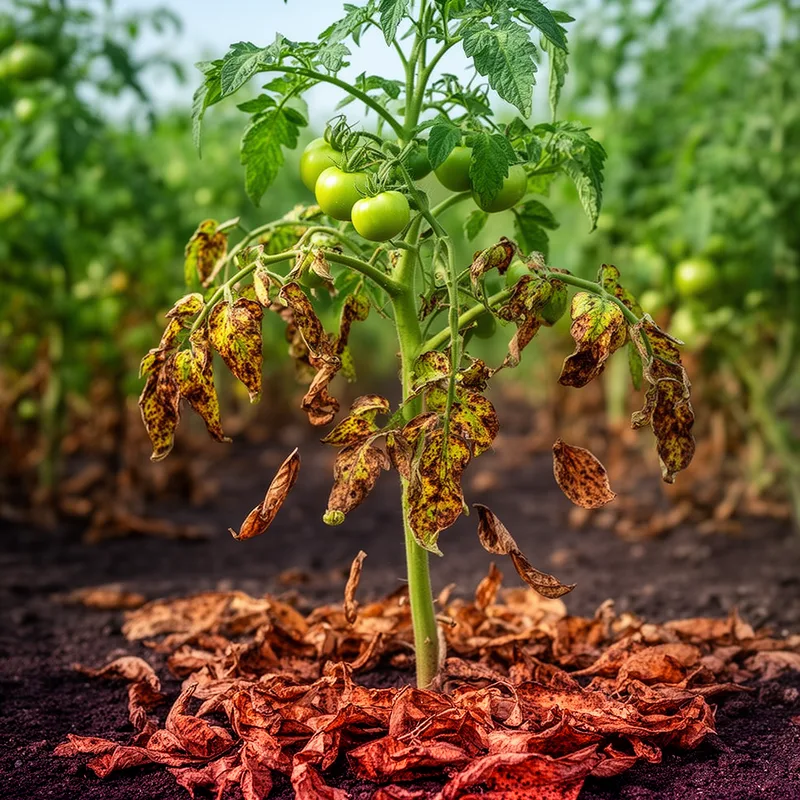
leaf blight
- noun
- To combat leaf blight, he applied a special fungicide that targets the disease and helps preserve the plant's leaves.
- southern leaf blight
- corn leaf blight
Examples
-
The farmer lost many crops to leaf blight, which caused the leaves to turn brown and fall prematurely.
-
The greener leaf of the tropical corn line on the left shows that it is more resistant to corn leaf blight than the severely damaged leaves.
Academic text (1997) -
In modern times, when southern corn leaf blight attacked the U.S. corn crop in 1970, major losses were averted by replanting with resistant varieties held in storage by seed companies.
Academic text (1998) -
James Nyanapah, a North Carolina State University Ph.D. candidate in plant pathology, prepares a culture of Exserohilum turcicum, the fungus that causes northern leaf blight.
Academic text (1997) -
Gardeners should monitor their plants closely for signs of leaf blight, especially during the rainy season when the disease is more likely to spread.
Synonyms
 7
7.3
7
7.3

A plant disease that makes leaves and stems die without rotting

A problem that makes a plant's leaves sick or damaged
How Severe
- Specialized

 1
7.0
1
7.0

- Specialized
- Specialized
1
6.5
Surface Forms
Morphology
The meaning is directly compositional: 'blight' denotes a plant disease and 'leaf' specifies the affected organ, so a learner who knows both words can infer a disease affecting leaves (browning/premature falling). This modifier + disease pattern is common and cross-linguistically transparent, so the sense should be immediately understandable at B1 if the constituents are known.
Etymology
Leaf blight comes from the clear picture of many leafs turning brown and dying from a plant sickness. The word blight means serious damage, so leaf blight is a 'disease' that makes leaves wither and fall.