

leaf-roller
- noun
- Specialized
- The caterpillar of the leaf-roller can cause significant damage to crops by rolling up leaves.
Examples
-
Gardeners often look for signs of a leaf-roller infestation in the spring and summer.
-
A biologist collected several leaf-rollers for her entomology research project.
-
The leaf-roller is a fascinating insect.
-
Many leaf-rollers can be found in gardens.
-
Gardeners often check for leaf-rollers in their plants because these larvae can damage leaves.
-
The leaf-roller moth uses silk to roll leaves together, creating a protective nest for its larvae.
-
During the summer, farmers watch for leaf-rollers that can harm their crops by tying leaves with silk.
Synonyms
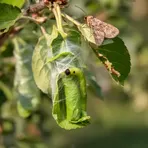
A small moth whose caterpillars roll leaves and tie them with silk to make a nest
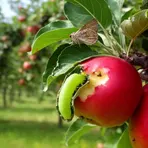
A small moth whose caterpillars roll leaves and eat fruit

A small moth whose caterpillars roll leaves and can damage fruit crops
Surface Forms
Morphology
Etymology
Leaf-roller comes from the simple English parts leaf and roller, where a 'roller' is something that 'rolls'. It names a moth whose caterpillar rolls and ties leaves with silk to make a small nest, which is why the name fits.

