
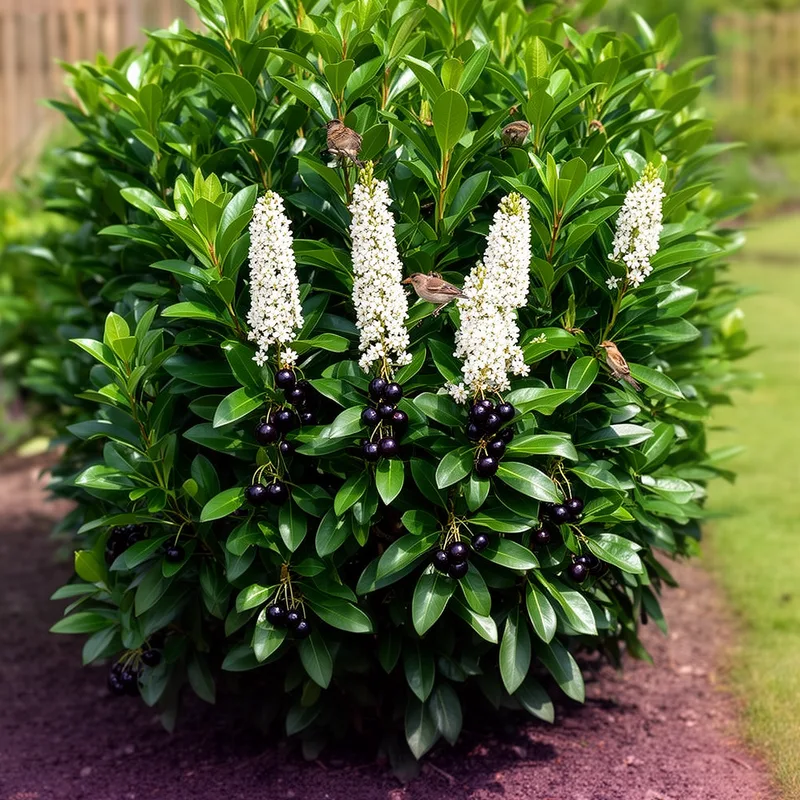
laurel cherry
- noun
- /ˈlɔːrəl ˈʧɛri/
- Specialized
- The laurel cherry is often used as a decorative hedge in gardens.
Examples
-
Gardeners appreciate the glossy leaves and fragrant flowers of the laurel cherry.
-
Birds are attracted to the fruit of the laurel cherry, even though it is toxic to humans.
-
The laurel cherry tree blooms beautifully in spring.
-
Many gardeners prefer laurel cherries for their glossy leaves.
-
The laurel cherry is often used as a decorative hedge in gardens.
-
Gardeners appreciate the glossy leaves and fragrant flowers of the laurel cherry.
-
In the park, the laurel cherry tree provides shade and beauty during the summer.
Synonyms

A dense evergreen shrub with shiny leaves and white flowers used for hedges

A bush or small evergreen tree with shiny leaves and white flowers used as a garden hedge
Surface Forms
Morphology
The compound name combines two concrete plant nouns so its referent is directly inferable: 'laurel' (an evergreen) + 'cherry' (a tree) yields a tree with laurel-like/evergreen characteristics. Plant-naming noun+noun compounds are cross-linguistically common and show no idiomatic shift here, so a B1 learner who knows both constituents would likely understand the meaning.
Etymology
Laurel cherry comes from a simple picture: its shiny leaves look like laurel and its small fruits look like cherry. That's why the name helps you remember an evergreen shrub with glossy leaves and cherry-like berries.

