
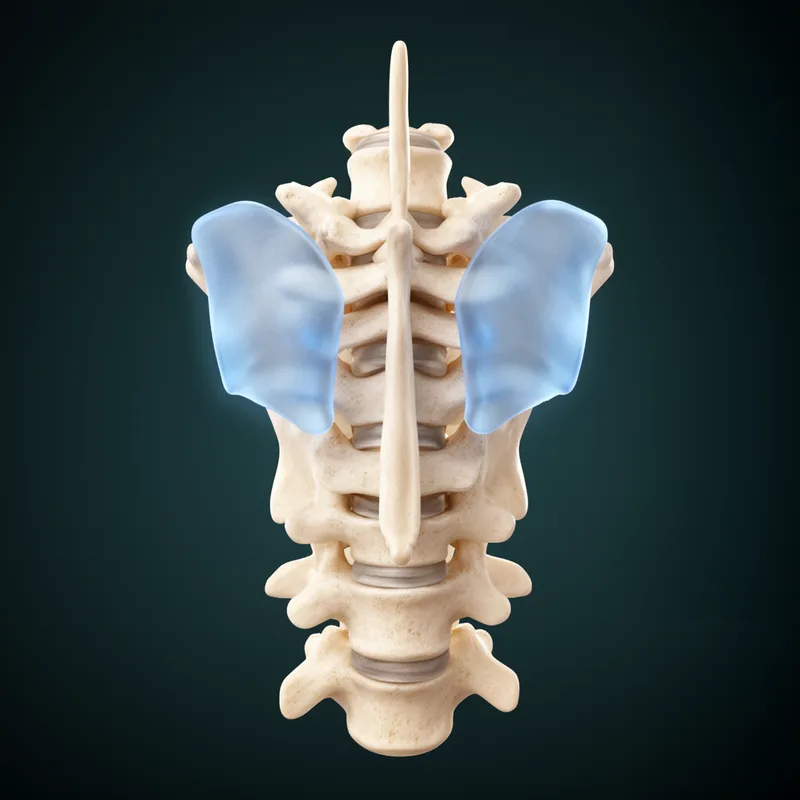
lamina arcus vertebrae
- noun
- /ˈlæmɪnə ˈɑrkəs ˈvɜrtɪbreɪ/
- Specialized
- The spinous process extends directly from the lamina arcus vertebrae in the spinal column.
Examples
-
During surgery, the lamina arcus vertebrae may be removed to relieve pressure on the spinal cord.
-
The lamina arcus vertebrae is crucial for spinal stability.
-
Damage to the lamina arcus vertebrae can affect the integrity of the entire vertebral arch.
-
In anatomy, the laminae arcus vertebrae provide structure to the vertebral arch.
-
Damage to the lamina arcus vertebrae can affect the integrity of the entire vertebral arch.
-
During surgery, the lamina arcus vertebrae may be removed to relieve pressure on the spinal cord.
-
The spinous process extends directly from the lamina arcus vertebrae in the spinal column.
Surface Forms
Morphology
Given knowledge of the constituents (lamina = thin layer, arcus ≈ arch, vertebra(e) = spinal bones), the phrase compositionally denotes the thin layer (lamina) of the vertebral arch, so the overall meaning is directly inferable from the parts. Although 'arcus' is a Latin form not listed in the dictionary, the morphological logic mirrors common anatomical noun–noun genitive constructions and is therefore transparent to learners who know the component meanings.
Etymology
Lamina arcus vertebrae comes from Latin words that give a simple picture: lamina means a thin 'plate', arcus means an 'arch', and vertebrae refers to the spine. The name describes the thin, flat back part of a vertebra that makes the 'arch' and from which the 'spinous process', the bony ridge you can feel on your back, extends, so the term points directly to that part today.

