
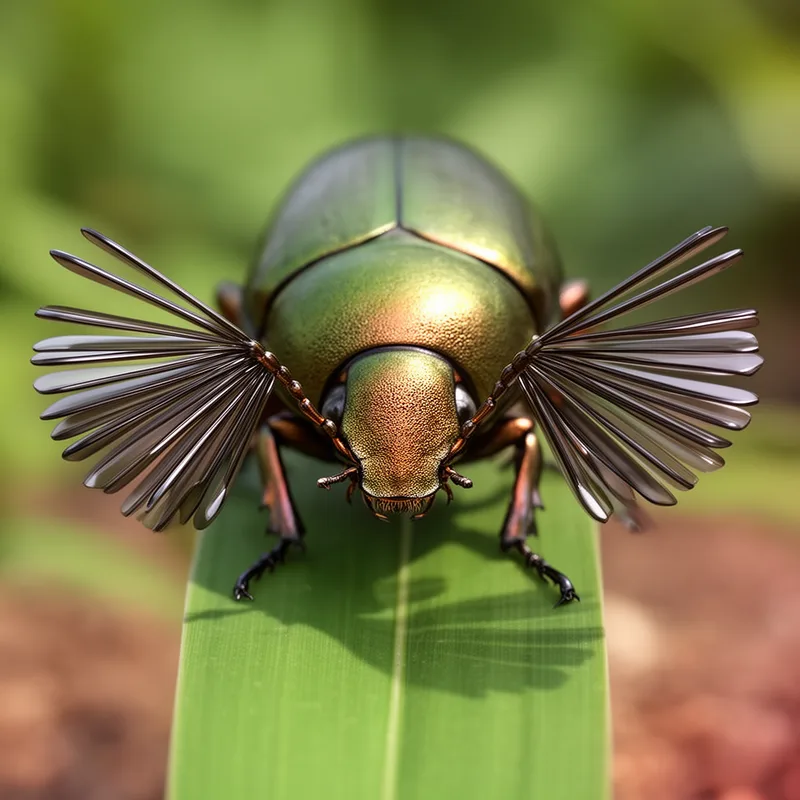
lamellicorn beetle
- noun
- /ˈlæməˌlɪkɔrn ˈbiːtəl/
- Specialized
- The lamellicorn beetle can be identified by its unique, plate-like antennae.
Examples
-
Many species of scarab are classified as lamellicorn beetles due to their characteristic antennae.
-
Entomologists studied the evolutionary advantages of the lamellicorn beetle’s antenna structure.
-
The lamellicorn beetle is known for its unique antennae.
-
Many lamellicorn beetles can be found in tropical regions.
-
Entomologists studied the evolutionary advantages of the lamellicorn beetle’s antenna structure.
-
The lamellicorn beetle can be identified by its unique, plate-like antennae.
-
Many species of scarab are classified as lamellicorn beetles due to their characteristic antennae.
Synonyms

A former group of beetles like scarab and stag beetles with plate-like antennae
Surface Forms
Morphology
lamellicorn + beetle
The noun phrase is fully compositional: the adjective 'lamellicorn' describes a morphological feature (antennae with plate-like segments) and 'beetle' names the insect, so the combined meaning is simply 'a beetle with plate-like (lamella) antenna segments'. Although 'lamellicorn' is a technical/rare term and may be unknown to B1 learners, if they know the constituent meanings the overall MWE meaning is directly derivable.
Etymology
Lamellicorn beetle may come from old words for lamell meaning 'thin plates' and corn meaning 'horn'. These beetles have antennae that end in flat, plate-like pieces that look like a small fan or horn, so the name points to their 'plate-like' antennae.

