
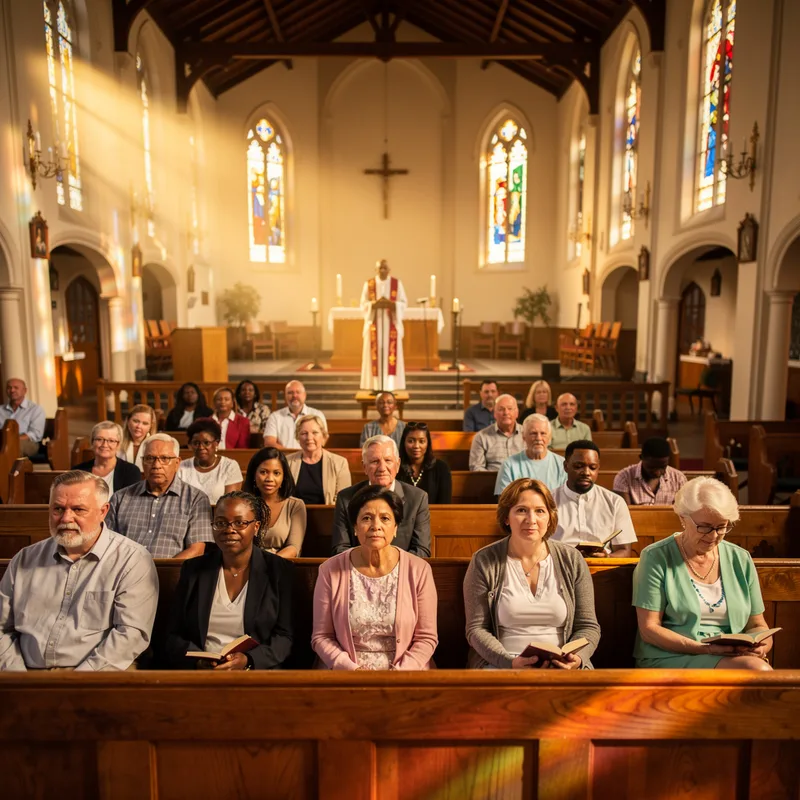
laity
 10
7.2
10
7.2

- noun
- /ˈleɪ.ɪ.ti/
- At the same time, the laity demand a more mystical element in religious life.
- clergy and laity
- church laity
- members of the laity
Loading YouTube…
Watch on YouTubeLaymen, laity are people who are ordinary people, believers but not clergy.
- Laymen, laity are people who are ordinary people, believers but not clergy.
Examples
-
In her speech, she called on the Boston Catholic laity to establish programs like those in Philadelphia.
Academic text (1999) -
For the Orthodox, though, the concept of conciliarity extends also to the laity.
Academic text (2013) -
Among Christian brothers and sisters, and among laity and church leadership, what is missing most is open and free speech.
Academic text (2013) -
But the laity no longer responded to such a call in 1955.
Academic text (1994) -
"The Second Vatican Council called for the laity to have full, conscious, and active participation.
Blog text (8) -
What I suggest, dear Cardinal Archbishop, is to incorporate the laity into your education ministry.
Blog text (12) -
Still, the church remained on the sideline, encouraging the laity to respond to political issues with civic actions.
Academic text (1996) -
CEBs also place the laity at the center of pastoral work.
Academic text (1999) -
Indeed, rather than alienating the laity, screens became a tangible sign of lay identity within many churches.
Academic text (2000) -
The laity play an important role in supporting the mission of the church.
Synonyms

People who belong to a church but are not priests

People who are not experts in a subject
Antonyms

How Clerical

Surface Forms
Etymology
Laity comes from the Greek word laikos, from laos meaning 'the people', and it shares the same root as the English word lay meaning 'not clergy'. So the laity are the ordinary members of a church — the people who are not priests or ministers.