
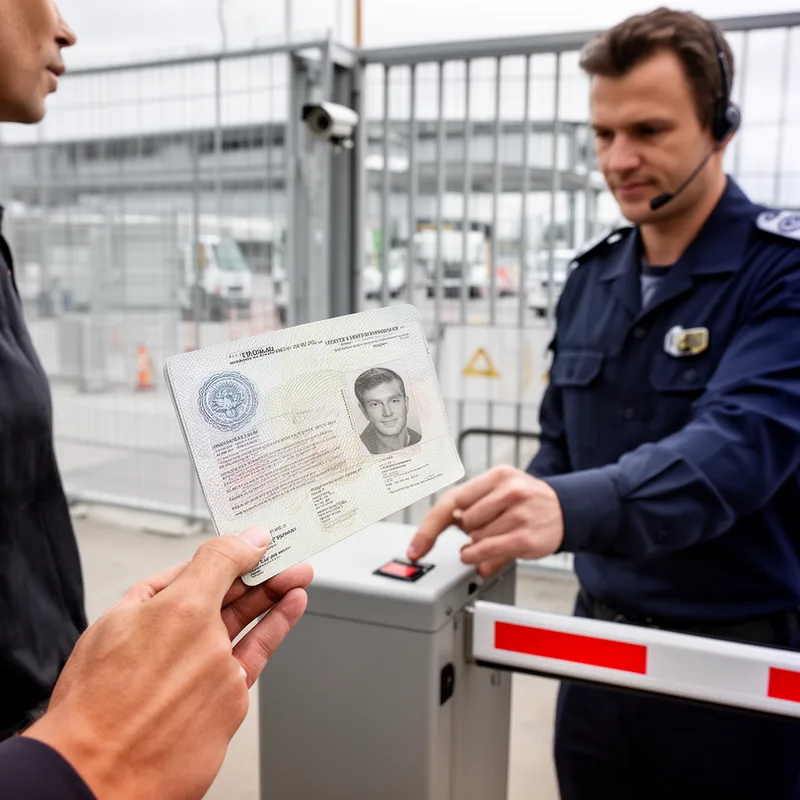
laissez passer


 1
9.9
1
9.9
- noun
- /ˌleɪˌzeɪ ˈpɑːseɪ/
- Formal
- To travel across the border, you must show your laissez passer at the checkpoint.
Examples
-
The humanitarian worker carried a laissez passer that allowed her to enter restricted areas during the crisis.
-
Solomon carried a laissez-passer from the Comité Central itself, or rather, a forgery indistinguishable from it, and was obviously not someone to be trifled with.
Fiction book (1994) -
After receiving the laissez passer from the embassy, she was able to visit several countries without issues.
Synonyms
 374
1.6
374
1.6
An official ticket that allows entry to a place or event
 262
2.1
262
2.1
An official paper that lets someone do something
 223
4.4
223
4.4
Official permission to enter a place or take an action
 18
4.2
18
4.2
An excuse that lets someone avoid rules or blame because of their position

An official paper or card that lets you go into a place
Surface Forms
Morphology
laissez + passer
The phrase literally combines French laissez (let/allow) + passer (to pass), so a learner who understands those constituents can infer the sense 'allow to pass' and thus the noun sense 'a document that allows passage'. It is a loaned fixed form (French) and may be less obvious to learners who do not recognise the French words, but given the instruction to assume knowledge of the parts the meaning is directly derivable.
Etymology
Laissez passer comes from the French words laissez and passer, which together mean 'let pass'. Imagine a guard holding a paper that says 'let pass' and waving someone through a gate, so today a laissez passer is an official paper that lets a person travel or enter restricted areas.