
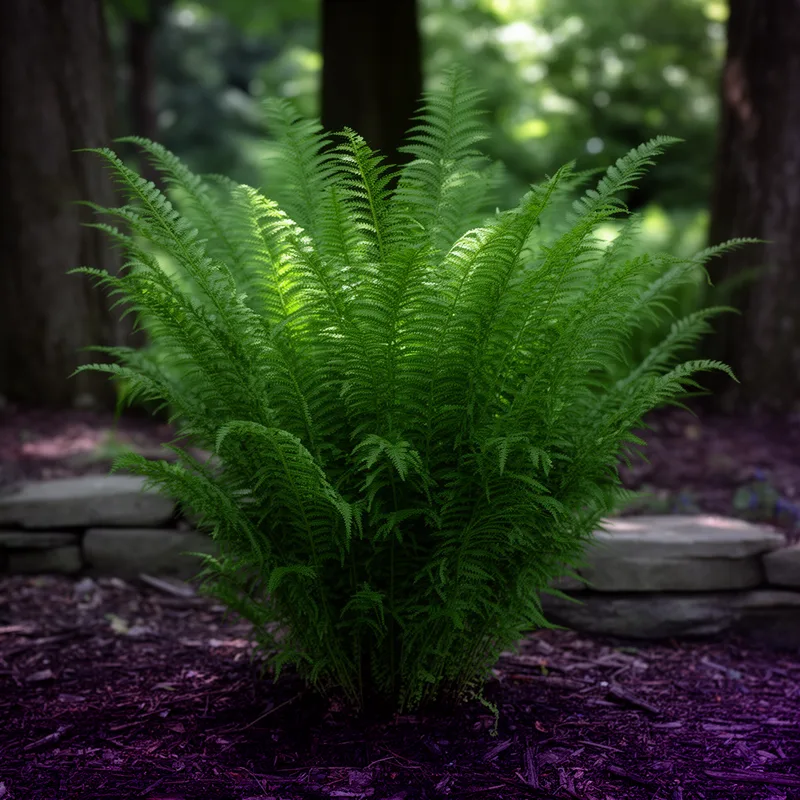
lady fern
- noun
- /ˈleɪdi fɜrn/
- The lady fern thrives in shaded areas.
- lady fern (Athyrium)
- lady fern (Athyrium filix)
- lady fern (Athyrium filix-femina)
Examples
-
The lady fern, with its graceful fronds, is a popular choice for adding greenery to indoor spaces.
-
Many gardeners plant lady ferns beneath trees to add lush greenery.
-
I identified the lady fern by its finely divided fronds.
-
The lady fern is popular in shaded garden borders due to its graceful leaves.
-
I planted several lady ferns in my garden.
-
In the shaded corner of the garden, the lady fern thrived with its delicate, feathery foliage.
-
During our hike, we spotted clusters of lady ferns growing elegantly by the stream's edge.
Synonyms
A fern with delicate feathery leaves often grown in shady gardens
How Big


Surface Forms
Morphology
lady + fern
The compound is a straightforward noun phrase: knowing 'fern' (a type of plant) and 'lady' (a modifier suggesting feminine/delicate qualities) a B1 learner can infer this refers to a particular kind of fern. Plant names formed by a descriptive modifier + species are cross-linguistically common, so the basic meaning 'a type of fern with delicate foliage' is transparently derivable from the parts.
Etymology
Lady fern may get its name from the plant's soft, feathery leaves that people thought were gentle and graceful like a lady's skirt or hair, and fern simply names the plant. That's why lady fern means 'a fern with delicate, feathery leaves'.