
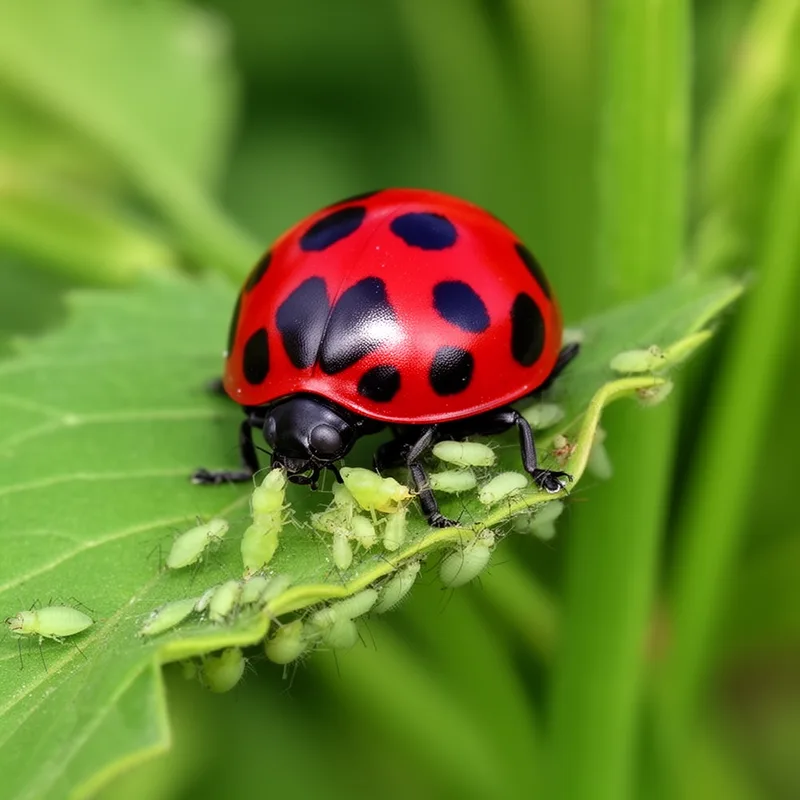
lady beetle


 1
1.8
1
1.8
- noun
- /ˈleɪdi ˈbiːtəl/
- US
- The lady beetle is known for its bright colors and is often found feeding on aphids in gardens.
- other lady beetles
Loading YouTube…
Watch on YouTubeBut when you source your your ladybugs from a rapidable source, you should be getting true ladybugs, not lady beetles.
- But when you source your your ladybugs from a rapidable source, you should be getting true ladybugs, not lady beetles.
Examples
-
Other six-legged immigrants include some species of lady beetles that give farmers biological options to insecticides.
Academic text (1995) -
Lady beetles have been imported, reared, and released as biological control agents (Obrycki and Kring 1998).
Academic text (2005) -
When the lady beetles land on the wall, they tend to walk upwards.
Academic text (1995) -
PHOTO: Tiny lady beetles have big biocontrol potential.
Academic text (1995) -
At least one band of these lady beetle colonists was hardy and lucky enough to survive and reproduce.
Academic text (1995) -
A biological standout in many ways, H. axyridis has a wider range of colors and spot numbers than other lady beetles.
Academic text (1995) -
The "seven-spot" and five other exotic lady beetles have made the Eastern United States their adoptive home since 1912, most since the 1960s, Day says.
Academic text (1995) -
One of the most successful non-native predators is Coccinella septempunctata, the sevenspotted lady beetle.
Academic text (1995) -
And compared to urbanized coastal ports, lady beetles leaving a ship on an inland channel would stand a better chance of finding aphids nearby in farms and forests.
Academic text (1995) -
New information suggests that several non-native lady beetles arrived in a time-honored immigrant fashion—by boat—says Agricultural Research Service entomologist William H. Day.
Academic text (1995)
Synonyms
 21
1.0
21
1.0
A small round beetle with a red or yellow back and black spots that eats small insects
 3
1.0
3
1.0
A small round insect that often looks red with black spots
 1
2.6
1
2.6
A small round beetle often red with black spots that eats insects like aphids

A small round insect with bright spots that eats aphids
Surface Forms
Morphology
The presence of 'beetle' makes it clear to a B1 learner that this is a type of insect, so knowing both words will allow them to infer it denotes a particular kind of beetle. However, 'lady' does not transparently contribute descriptive meaning (it is a conventional part of the name, as in 'ladybug'/'ladybird'), so specific attributes (small, round, spotted) are not fully predictable from the constituents alone.
Etymology
Lady beetle may come from an old story from Europe. One popular story says farmers saw the small red beetle eating crop pests and called it 'Our Lady's beetle' because it helped their fields, so the words lady and beetle came to mean this useful little insect, also called 'ladybug'.