
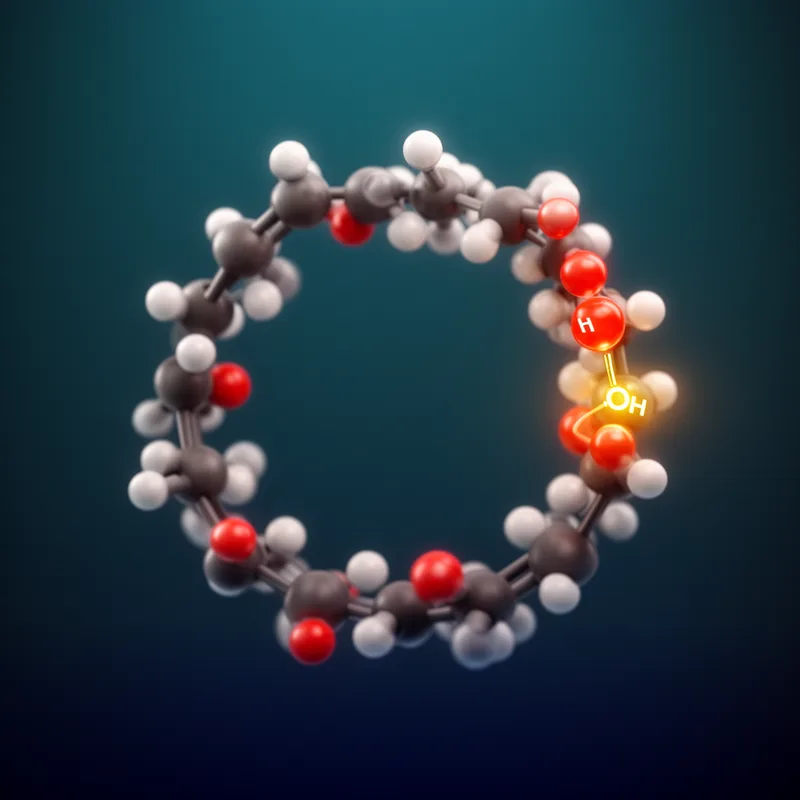
lactone


 1
9.5
- noun
- /ˈlæktoʊn/
- Specialized
- This now becomes on this lactone, it's actually an acid.
- terpene lactones
Loading YouTube…
Watch on YouTubeBut you know, it's, they're called lactones, lactic acid, milk.
- But you know, it's, they're called lactones, lactic acid, milk.
Examples
-
But you know, it's, they're called lactones, lactic acid, milk.
-
And so they give the lactone, but the lactone rapidly ring opens inside the cell.
-
And then he did his heating to make a lactone and reduce it with sodium, which made it back into sugar again.
-
Because it contains kava-lactones that promote muscle relaxation and relieve anxiety, kava may also enhance pain management.
Academic text (2003) -
The researcher synthesized a novel lactone that showed potential as a flavoring agent in food products.
-
In organic chemistry, a lactone is formed when a hydroxy acid undergoes intramolecular esterification.
-
The study revealed that certain lactones possess antimicrobial properties, making them useful in natural preservative formulations.
Surface Forms
Morphology
lactone = lactic (opaque) = lact + one
The combining form 'lact-' is technical and not a standalone English word meaning 'milk' for most learners, and the chemical suffix '-one' does not yield the expected everyday meaning, so the sense is not derivable by an average B1 learner.
Etymology
The word lactone comes from the root lact-, which means 'milk', because scientists first found related acids in sour milk. The ending -one marks a type of chemical, so a lactone is a small ring made from those 'milk' acids, and that's why the name fits its chemical form.