
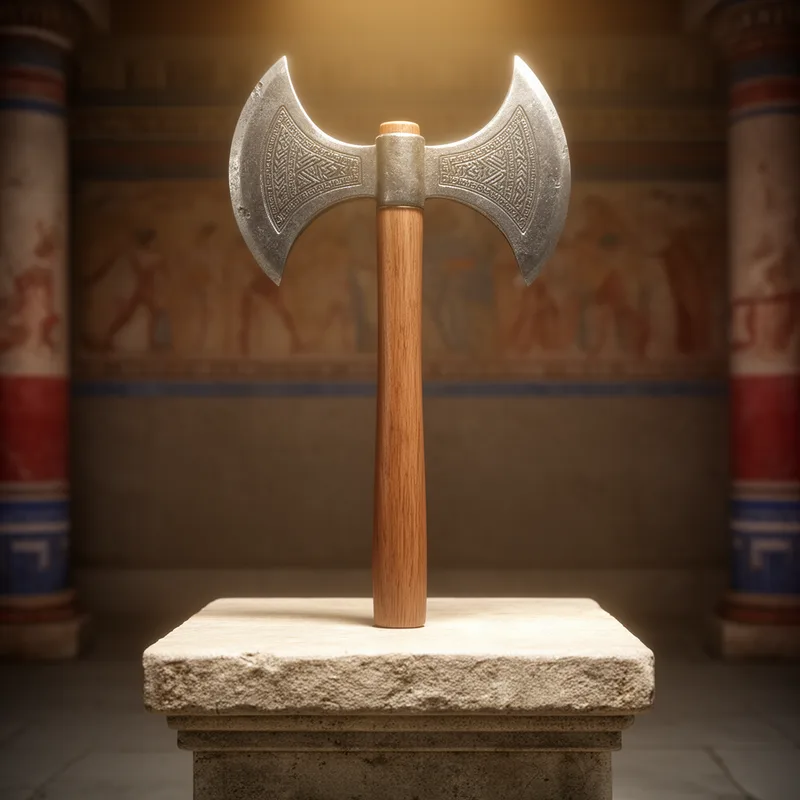
labrys
- noun
- /ˈlæbrɪs/
- Literature
- In Minoan ceremonies, the labrys was often used as a religious symbol.
Examples
-
The ancient artifact displayed a beautifully crafted labrys with intricate carvings.
-
The ancient Greeks used a labrys in their rituals.
-
Historians believe the labrys represented power and authority in several ancient societies.
-
A labrys symbolizes strength and duality.
-
The ancient artifact displayed a beautifully crafted labrys with intricate carvings, symbolizing Minoan artistry.
-
In Minoan ceremonies, the labrys was often used as a religious symbol, embodying duality and strength.
-
Historians believe the labrys represented power and authority in several ancient societies, highlighting its cultural significance.
Surface Forms
Etymology
Labrys originally named a 'double-headed axe' used in ancient Crete and Greece, where it served as a tool and a symbol of power. One idea even links it to labyrinth ('maze'), which helps you remember why today labrys still means that ancient double-headed axe.

