
kyphoscoliosis


 1
9.9
- noun
- /ˌkaɪfəˌskoʊliˈoʊsɪs/
- Specialized
- Forty-four percent of the patients had cerebral palsy, and all suffered from scoliosis or kyphoscoliosis.
Examples
-
Kyphoscoliosis is an example of a structural deformity of the spine that can be secondary to PD (Ferri, 2003).
Academic text (2004) -
Fifty-six percent of the patients had cerebral palsy, and all suffered from scoliosis or kyphoscoliosis.
Academic text (1996) -
The skeletal manifestations include arachnodactyly, tall stature, long limbs, kyphoscoliosis, and sternal, palatal, and joint defects.
Academic text (1992) -
Examination of the back and spine revealed loss of lumbar lordosis, bamboo spine, and kyphoscoliosis in the cervical and thoracic region with apparently normal intervertebral space.
Academic text (2007) -
He was diagnosed with kyphoscoliosis at age 6, which caused significant discomfort and required physical therapy.
-
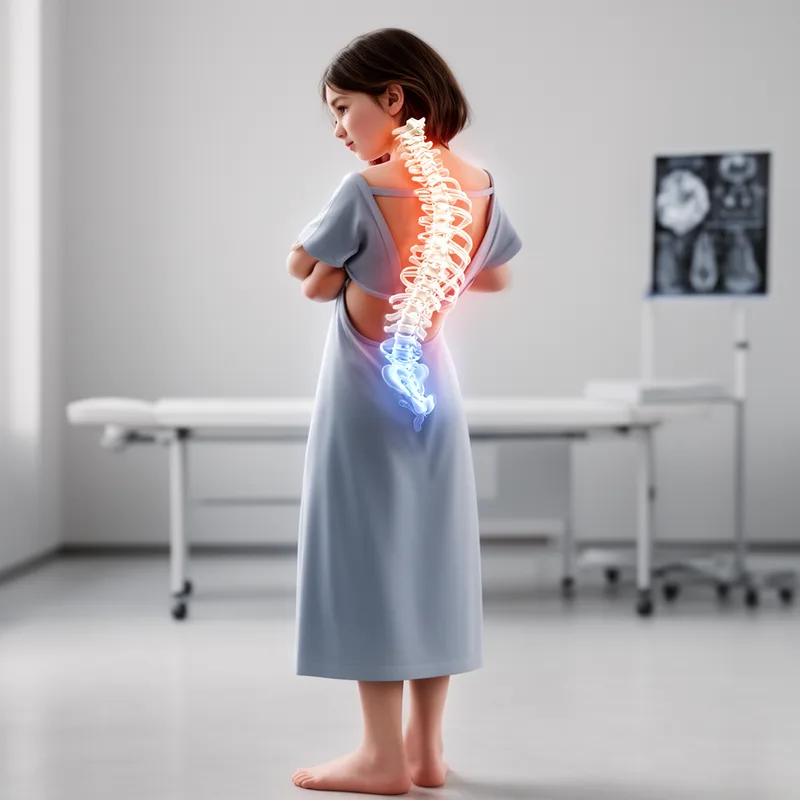
The doctor explained that kyphoscoliosis involves abnormal curvature of the spine in both directions, making it a complex condition.
-
Many patients with kyphoscoliosis experience difficulties with posture and may benefit from specialized support devices.
Synonyms
 1
6.4
A bend in the spine that is not normal and can cause pain or health problems
Surface Forms
Morphology
Etymology
Kyphoscoliosis combines kypho- (meaning 'hump' or 'bent forward', as in kyphosis) and scoliosis (from a root meaning 'curve'). So, kyphoscoliosis names a spine that has both a forward 'hump' and a side-to-side 'curve', which explains the condition's effect on posture.