
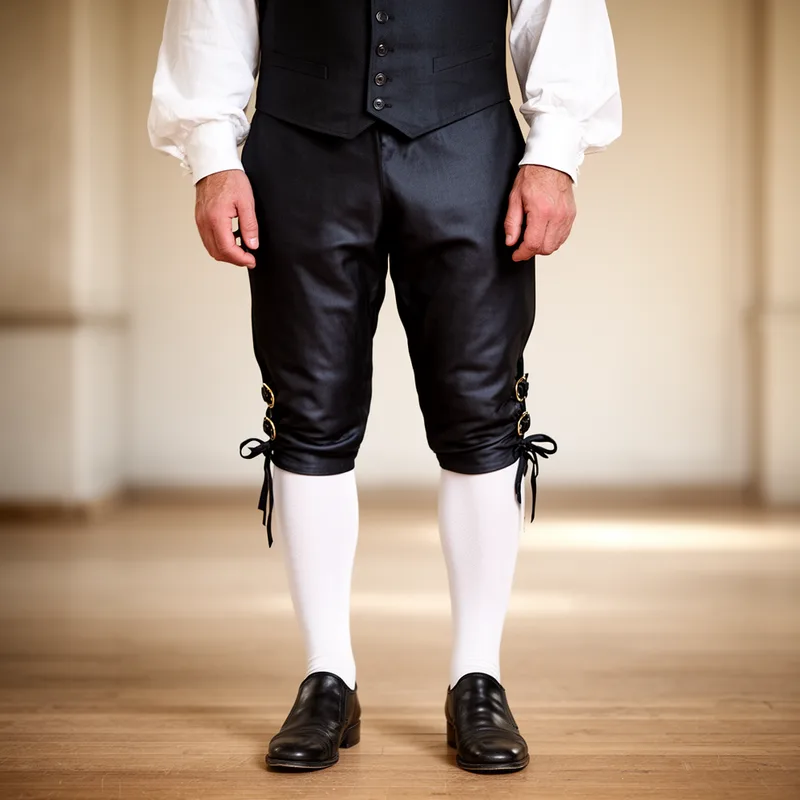
knee breeches


 1
9.9
1
9.9
- noun
- /niː briːtʃɪz/
- Archaic
- "Roger gestured at the Duke, stolid in white knee breeches and gold-braided coat.
- powdered wigs and knee breeches
- wigs and knee breeches
- satin knee breeches
Examples
-
Mr. Ireton, I was fighting for the liberty of the common people... when you were in knee breeches.
-
Pulling up on his knee breeches, the fat man introduced himself.
Fiction book (1992) -
A butler stood there, a proper butler of the old school in a powdered wig and knee breeches.
Fiction book (2000) -
Anglo-Virginia and secular civility: squires and attorneys in powdered wigs and knee breeches.
Academic text (2003) -
The aristocrat wore elaborate knee breeches to the grand ball, showcasing his status in society.
-
In the 18th century, men commonly donned knee breeches as part of their fashionable attire.
-
His costume featured knee breeches, which were a signature style of the historical period he portrayed.
Synonyms
 3
8.4
3
8.4
Loose trousers like old work pants
 2
8.1
2
8.1
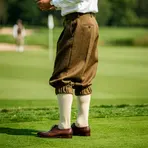
Loose knee-length trousers gathered at the knee and worn for sport or old-fashioned dress
 1
9.9
1
9.9
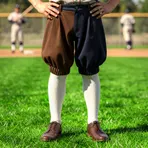
A type of short loose pants that gather at the knee
 1
9.9
1
9.9
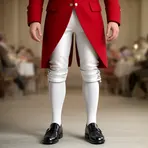
Trousers that end above the knee and fasten below it
 1
9.9
1
9.9
Short trousers that reach to the knee and are often worn by boys
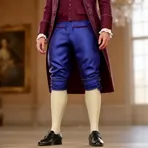
Knee-length trousers that men wore with formal clothes in the 17th and 18th centuries
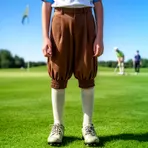
Short loose trousers gathered at the knee, often worn by boys or for sports

Short trousers that end above the knee, often worn by boys or for sports
Surface Forms
Morphology
The meaning 'short trousers fastened just below the knee' is directly and transparently derived from combining 'knee' (the joint) with 'breeches' (short trousers), since the compound specifies the location/length of the garment. This simple location-based noun-noun composition is cross-linguistically common, so a B1 learner who knows both constituents would readily infer the meaning (even if the term is somewhat archaic).
Etymology
The noun knee breeches comes from a simple picture: breeches is an old word for trousers, and these were short garments that ended and were fastened just below the knee. So the name means 'short trousers' worn by men in the 1600s and 1700s.