
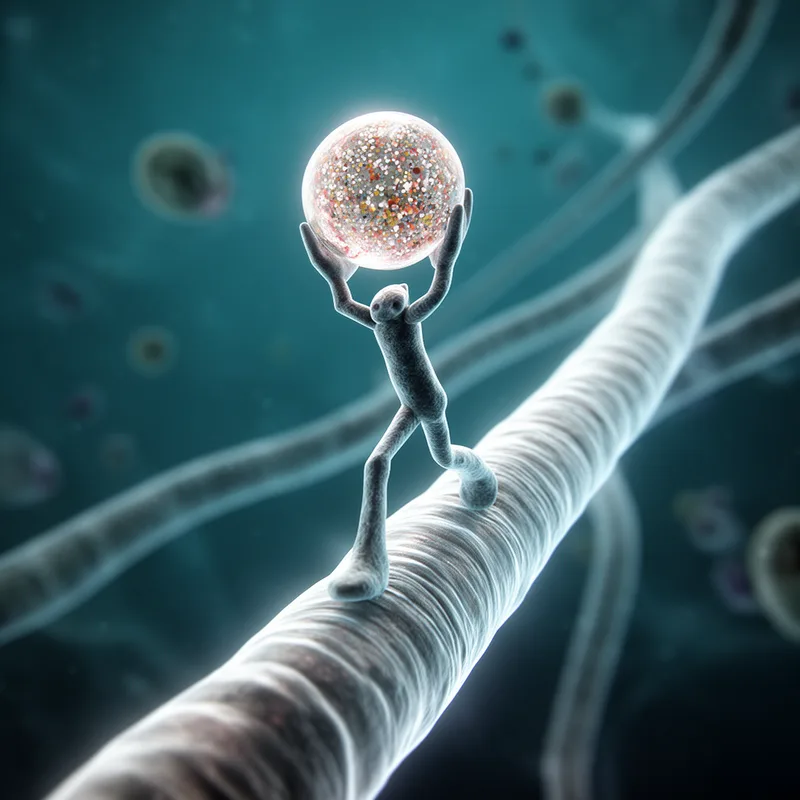
kinesin


 1
9.9
- noun
- /kɪˈniːsɪn/
- Specialized
- Kinesin moves in a manner similar to a train traveling on tracks, delivering materials inside the cell.
- kinesin motor
Examples
-
In the cell, kinesin carries vesicles to ensure they reach their destination.
-
How efficient is the kinesin motor and how much energy does it dissipate as it moves along the track?
Academic text (2006) -
Over time, many researchers around the world discovered that kinesins are a large family of proteins found in great abundance in cellular forms of life.
Blog text (7) -
The kinesin molecule works its way, taking almost humanlike steps along structures called microtubules inside cells.
Academic text (2005) -
Kinesin's role is to carry subcellular cargoes along microtubules.
Academic text (2006) -
The kinesin is highly processive—that is, it takes many steps before detaching from its microtubule track.
Academic text (2006) -
The kinesin molecule transports cargo along microtubules within the cell.
Synonyms
 1
9.9
A protein that moves cell parts and materials along tiny tubes inside cells
Surface Forms
Morphology
Etymology
The word kinesin comes from the Greek root kine- meaning 'move' and the protein ending -in. You can see the same root in kinetic and cinema, which are about motion. So kinesin is literally a 'mover' inside cells, carrying materials along tiny tracks.