
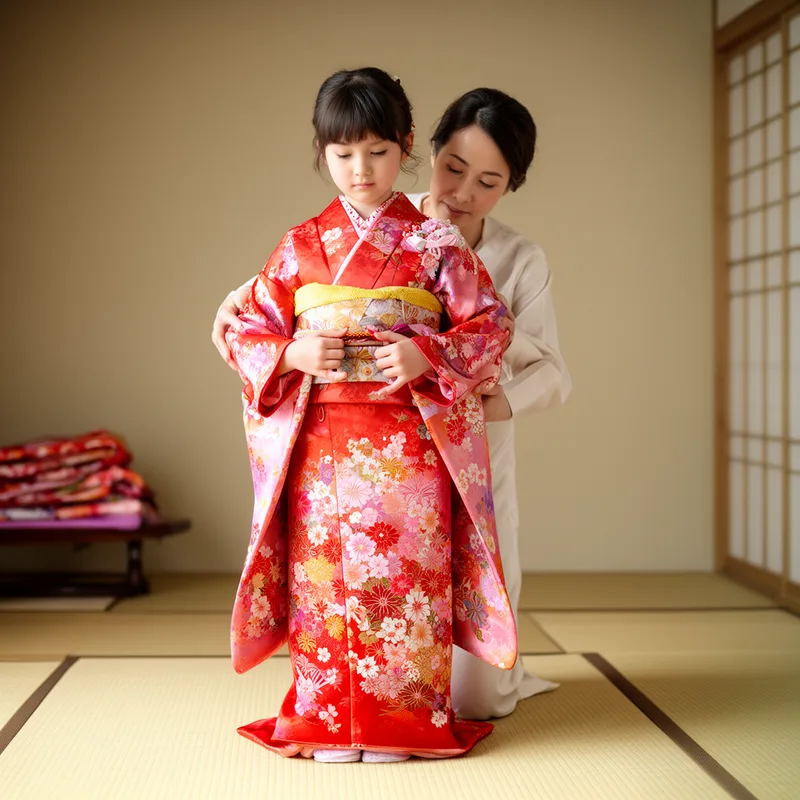
to kimono
- verb
- /kɪˈmoʊnoʊ/
- Before the ceremony, her mother carefully kimonoed her, adjusting the obi and sleeves.
Examples
-
He kimonoed himself quickly before stepping onto the stage for the performance.
-
The children were kimonoed for the festival by their grandmother.
-
She kimonoed her daughter for the festival.
-
I love to kimono myself before special occasions.
-
Before the ceremony, her mother carefully kimonoed her, adjusting the obi and sleeves.
-
The children were kimonoed for the festival by their grandmother.
-
He kimonoed himself quickly before stepping onto the stage for the performance.
Synonyms

 4
5.0
4
5.0

To dress someone in a long loose garment for a ceremony
 3
6.9
3
6.9
To put a long formal robe on someone for a ceremony
 1
8.9
1
8.9
To put a special robe on someone during a ceremony

To put on clothes for sleeping or dress someone in them
Idioms

- Offensive

 1
9.9
1
9.9
To show a company's private information to others, often during business talks
Surface Forms
Etymology
Kimono as a verb comes from the same Japanese parts kiru 'to wear' and mono 'thing', so to 'kimono' someone means to put this 'thing to wear' on them, in other words to dress them in a kimono.