
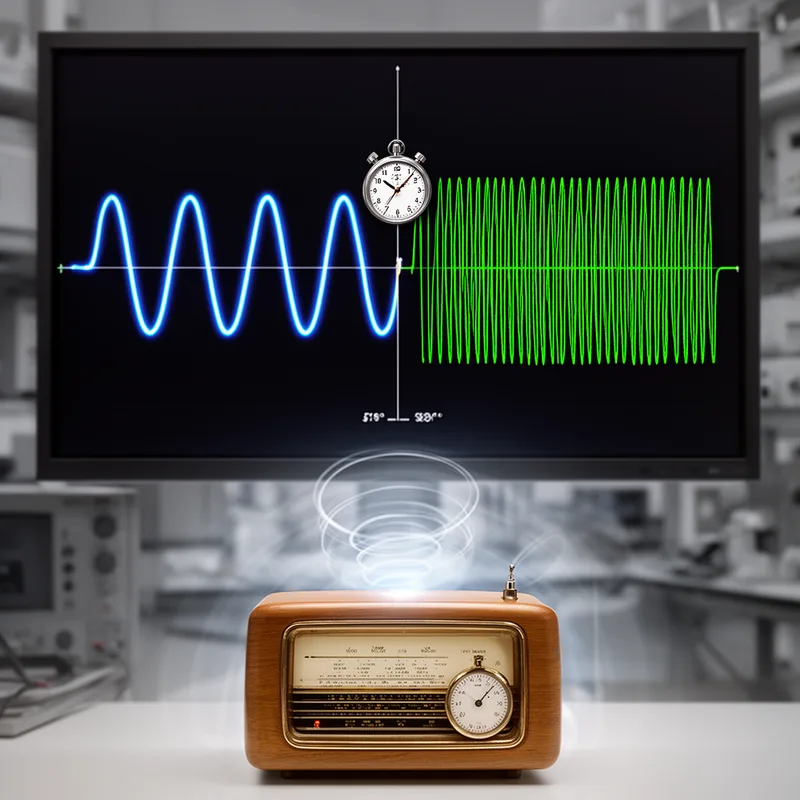
kilocycle per second
- noun
- /ˈkɪloʊˌsaɪkəl pər ˈsɛkənd/
- Archaic
- Here they plot it in kilocycles per second or kHz.
Examples
-
Radio waves are often measured in kilocycles per second to indicate their frequency.
-
When tuning the radio, you need to set it to 98 kilocycles per second for your favorite station.
-
The sound system operates at a frequency of 1,000 kilocycles per second for optimal performance.
Synonyms
 3
3.8
3
3.8

A measure of how often something repeats, equal to one thousand times each second
 1
3.7
1
3.7
A unit of frequency equal to one thousand cycles per second

 1
8.9
1
8.9
A unit for measuring radio waves that equals one thousand cycles per second
Surface Forms
Morphology
The phrase is compositionally built from technical unit parts: 'kilocycle' (1000 cycles per second) combined with the rate marker 'per' and the time unit 'second', so its meaning as a frequency unit is directly derivable from the constituents. This follows standard unit-formation patterns (kilo-/cycle/per/second) and maps onto the cross-linguistically common concept of kilohertz, making it transparent to learners who know the component words.
Etymology
Kilocycle per second literally says kilo ('a thousand') of a cycle per second ('one complete wave each second'), a simple way to name how many waves happen every second. Later people started to use the shorter name 'kilohertz', so kilocycle per second means the same as 'kilohertz'.