
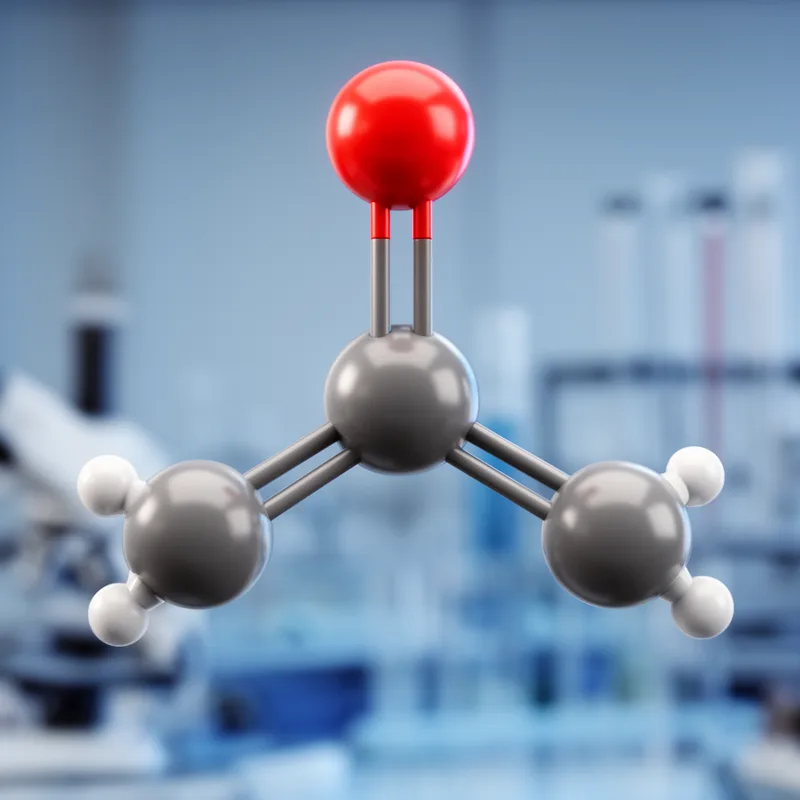
ketone group
- noun
- /ˈkiːtoʊn ɡruːp/
- Specialized
- Spectroscopic analysis can be used to identify the ketone group within a compound.
Examples
-
When oxidized, the secondary alcohol forms a ketone group in the molecule.
-
The ketone group is a defining feature of many organic molecules used in pharmaceuticals.
-
The ketone group is essential in organic chemistry.
-
A ketone group contains a carbon atom double-bonded to oxygen.
-
Researchers identified a ketone group in the structure of the new drug, which contributed to its effectiveness.
-
The chemist explained that the ketone group in organic compounds is essential for certain chemical reactions.
-
In the laboratory, students learned how to design compounds with a ketone group to study their properties.
Surface Forms
Morphology
ketone + group
If a learner already knows 'ketone' (a type of organic compound) and 'group' (a bonded assembly acting as one part), the phrase 'ketone group' is directly derivable as the functional group characteristic of ketones. This is a straightforward, compositional scientific noun–noun combination that follows common cross‑linguistic patterns in chemistry terminology, so the meaning is transparent to someone who knows the constituents.
Etymology
The term ketone group names the part of a molecule where a carbon atom is double-bonded to an oxygen atom and is also attached to two other carbon atoms. So, when chemists say a molecule has a ketone group, they mean it has that exact piece that makes the molecule a 'ketone'.

