
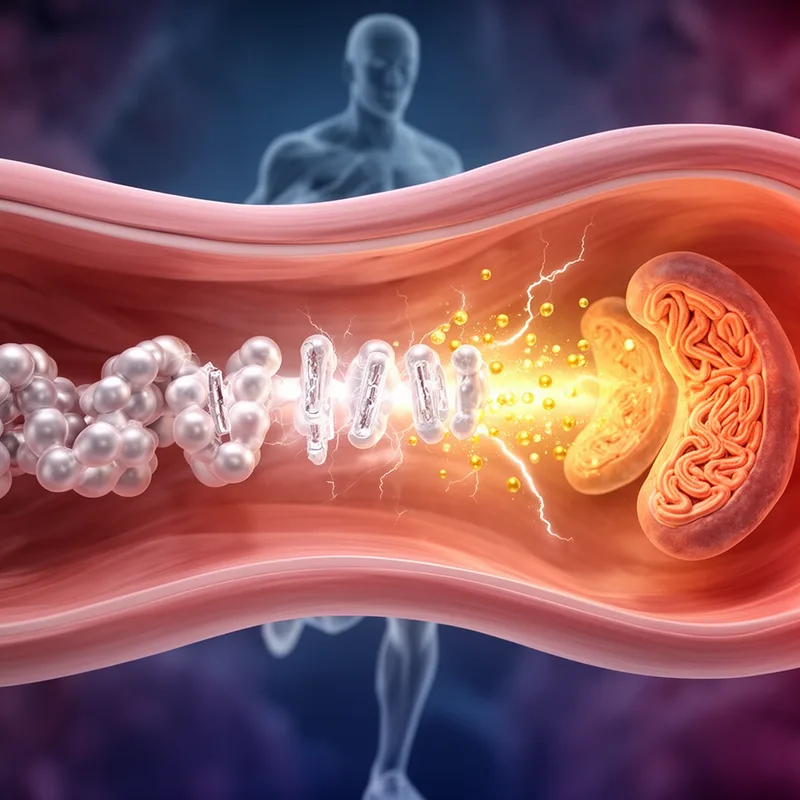
katabolic
- adjective
- /kəˈtæbəlɪk/
- Specialized
- During starvation, the body enters a katabolic state to provide energy.
Examples
-
The katabolic process releases energy from stored fats.
-
Scientists studied the katabolic pathways involved in energy release during exercise.
-
Certain hormones such as cortisol have a strong katabolic effect on muscle tissue.
-
During exercise, the body enters a katabolic state.
-
Certain hormones such as cortisol have a strong katabolic effect on muscle tissue.
-
During starvation, the body enters a katabolic state to provide energy.
-
The katabolic process helps convert fat into energy, aiding in weight loss.
Synonyms
 1
8.8
1
8.8

The body breaks down large molecules into smaller ones to release energy
Breaking down large molecules in the body into smaller parts to release energy
Surface Forms
Morphology
katabolic = catabolism (transparent) = catabol + ic
Katabolic is a variant spelling of 'catabolic' and is formed by the combining element 'catabol-' with the adjectival suffix '-ic', directly indicating relation to catabolism.
Etymology
Katabolic comes from Greek parts kata- meaning 'down' and ballein meaning 'to throw', and it is often spelled catabolic in English. So, think of 'throwing down' big molecules into smaller pieces, which is why katabolic means breaking down molecules to release energy.